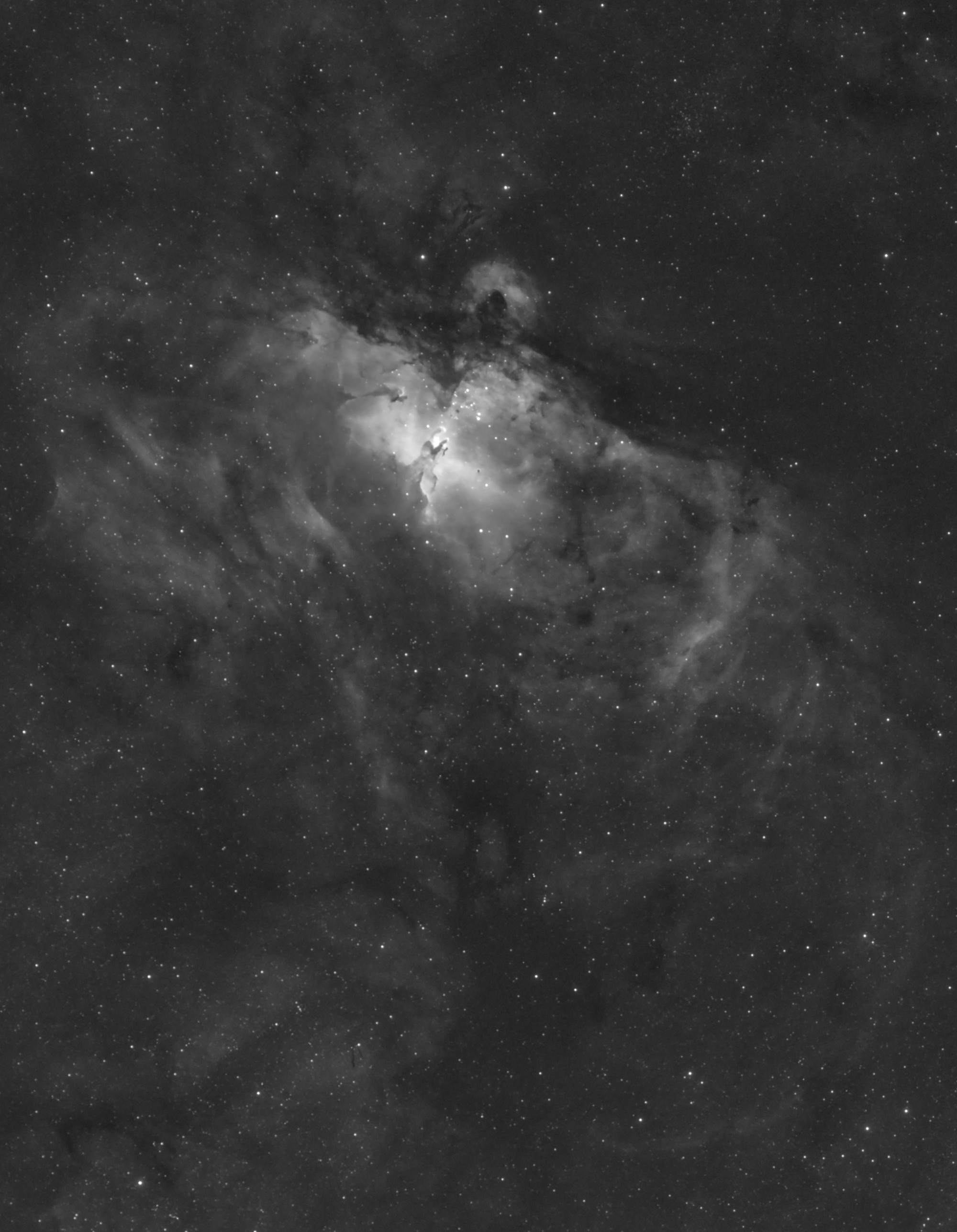
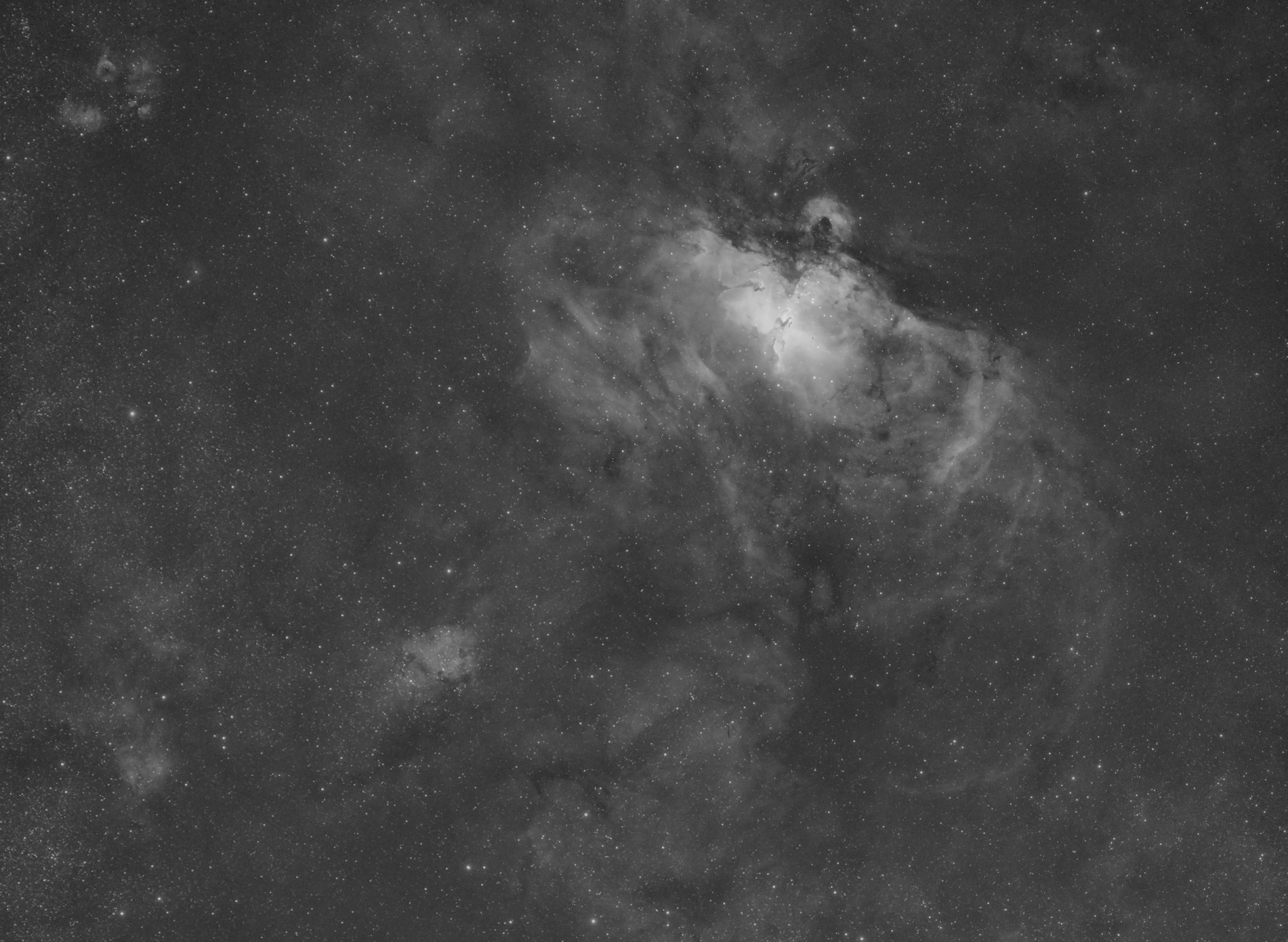
Messier 16 in Ha with the "Pillars of Creation"
The famous "Pillars of Creation" from the classic Hubble (HST) image are in the core of the Eagle Nebula (Messier 16). It's no Hubble image, but still crazy what I can capture with a 250mm refractor from my backyard in New Hampshire. Here's the famous "Pillars of Creation" Hubble image: https://upload.wikimedia.org/wikipedia/commons/6/68/Pillars_of_creation_2014_HST_WFC3-UVIS_full-res_denoised.jpg
This is a crop from the larger image with the Swan Nebula from last week. Notes: 36 x 240 second subs stacked in DSS, processed in PS2022. William Optics SpaceCat 51 Apo Refractor 250mm f/4.9, Astronomik 6nm Ha filter, ZWO ASI1600MM-Pro monochrome camera, Sky-Watcher EQ6-R Pro equatorial mount.
Posted June 10, 2022
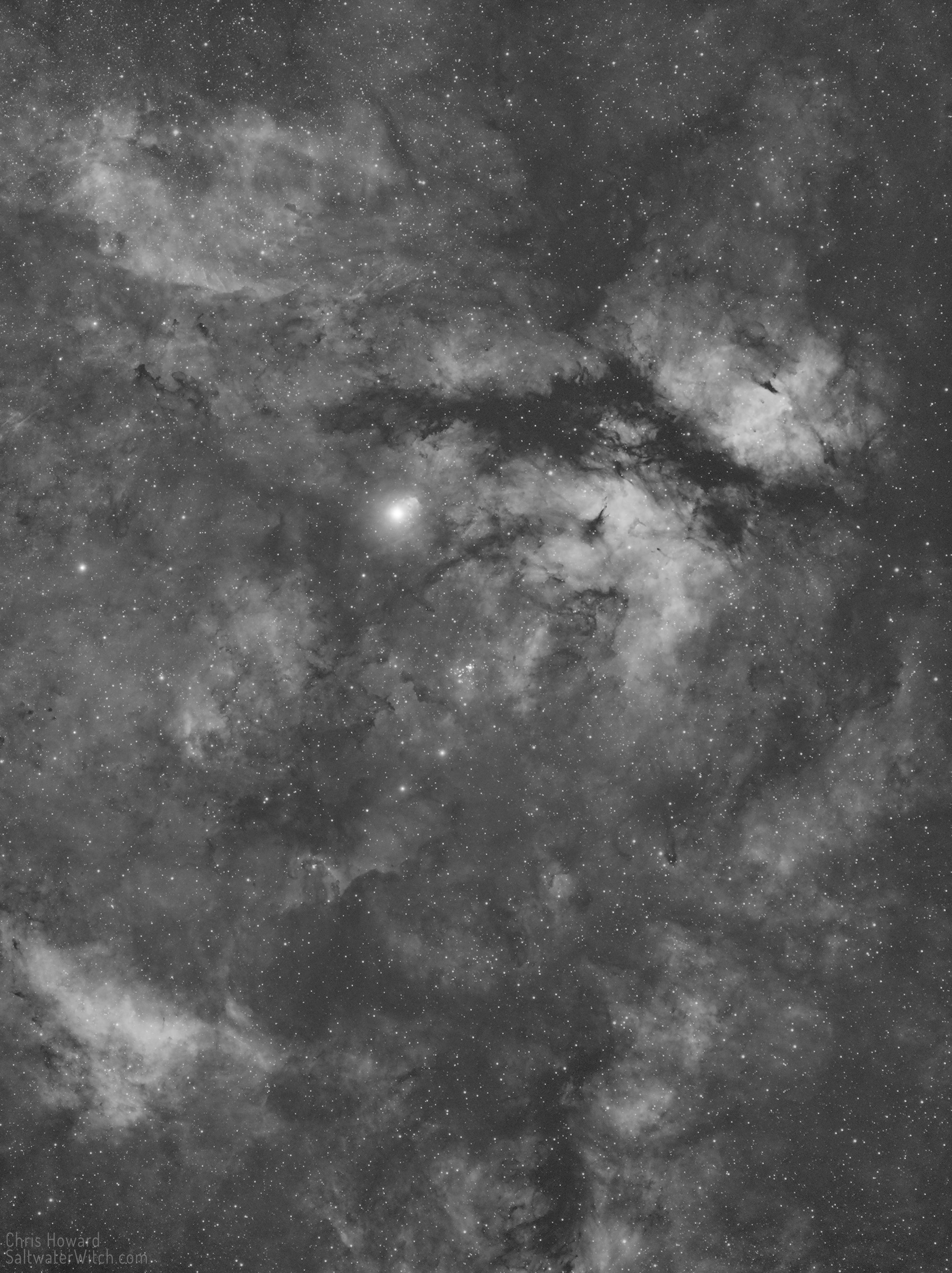
The Sadr Region (IC 1318) in Hydrogen-alpha
Astronomik 6nm Ha filter, 42 x 240 second subs stacked in DSS. Click the image for the full view
Posted June 7, 2022
What the Hell Happened to Canes Venatici?
<rant-cam ON>
Holy Rutting Poseidon, the pronunciation of the constellation Canes Venatici in English is an abomination (From wikipedia: /ˈkeɪniːz vɪˈnætɪsaɪ/). Seriously, you're telling me the accepted pronunciation is Kay-neez Ven-AT-i-SAI? The old ghost of a classicist in me (although more ancient Greek than Latin) really wants me to go full Latin, something like Kahn-ess Wen-a-teekee, but Venn-ah-TEE-see sounds great, or even Venn-ah-TEE-chee. Canes Venatici is Latin for "hunting dogs". We don't have to go back that far, but why aren't we pronouncing it to something closer to Latin? There is no way in hell it should be pronounced Kayneez Ven-AT-i-SAI. Who is to blame for this barbarous pronunciation? No, seriously, I'm asking? Now I'm thinking "wikipedia" is supposed to be pronounced Why-kuh-pi-DIE-uh. That makes about as much sense.
<rant-cam OFF>
Posted June 6, 2022
It was a night of dodging clouds and narrowband imaging...
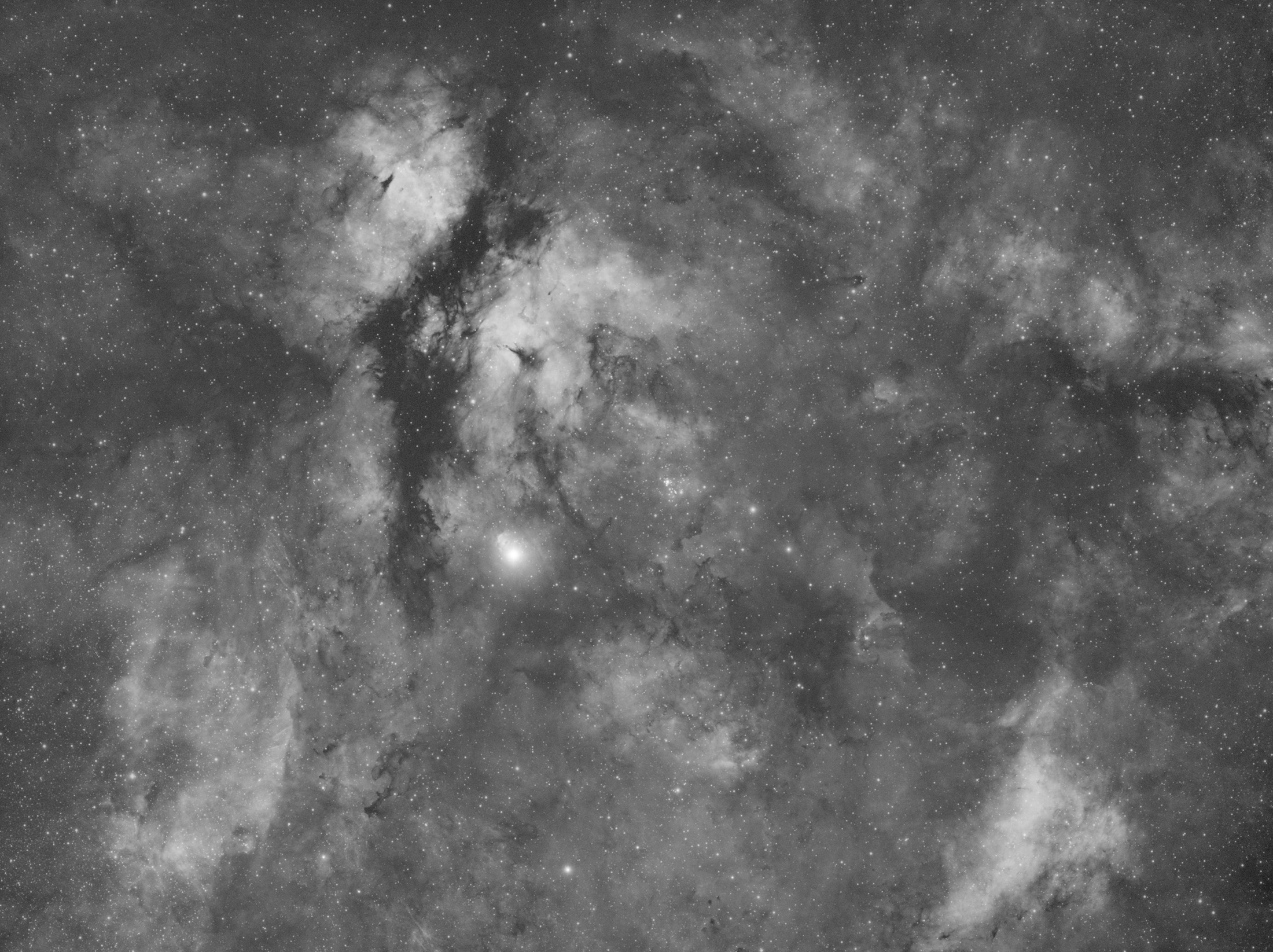
In two parts: I spent the first half of the night on IC 1318, the "Sadr Region" at the heart of the constellation Cygnus. IC 1318 is a vast and energetic emission nebula surrounding one of the brightest stars in the night sky, Sadr (γ Cygni). Click for the full sized image.
And then shifted the whole operation to the south to the constellation Serpens, just out from the Milky Way core, capturing Messier 16 (Eagle Nebula, NGC 6611), the bright nebula on the left side, and M17 (Swan Nebula, NGC 6618) on right.
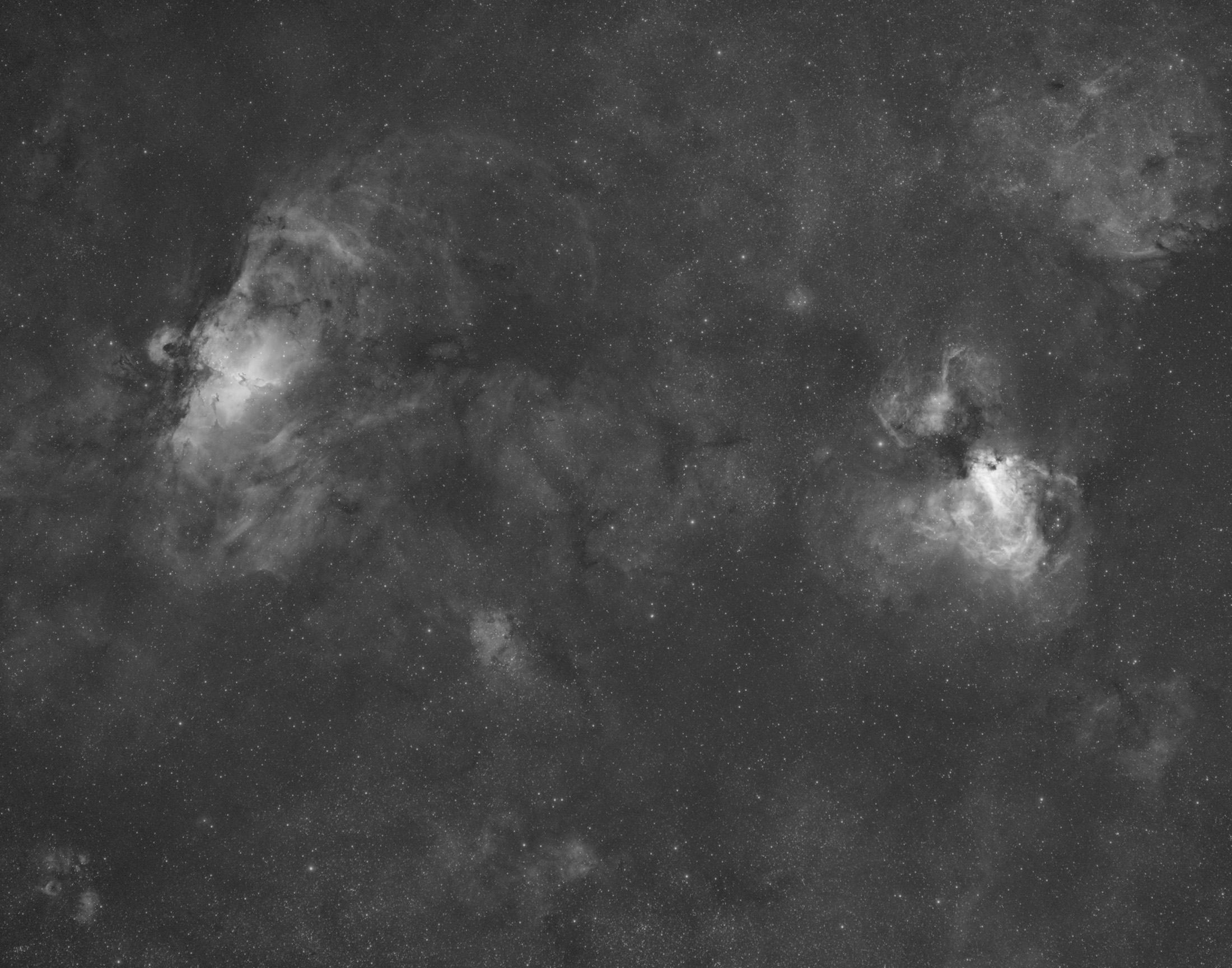
Notes: William Optics SpaceCat 51 Apo Refractor 250mm f/4.9, Astronomik 6nm Ha filter, ZWO ASI1600MM-Pro monochrome camera, Sky-Watcher EQ6-R Pro equatorial mount.
Posted June 6, 2022
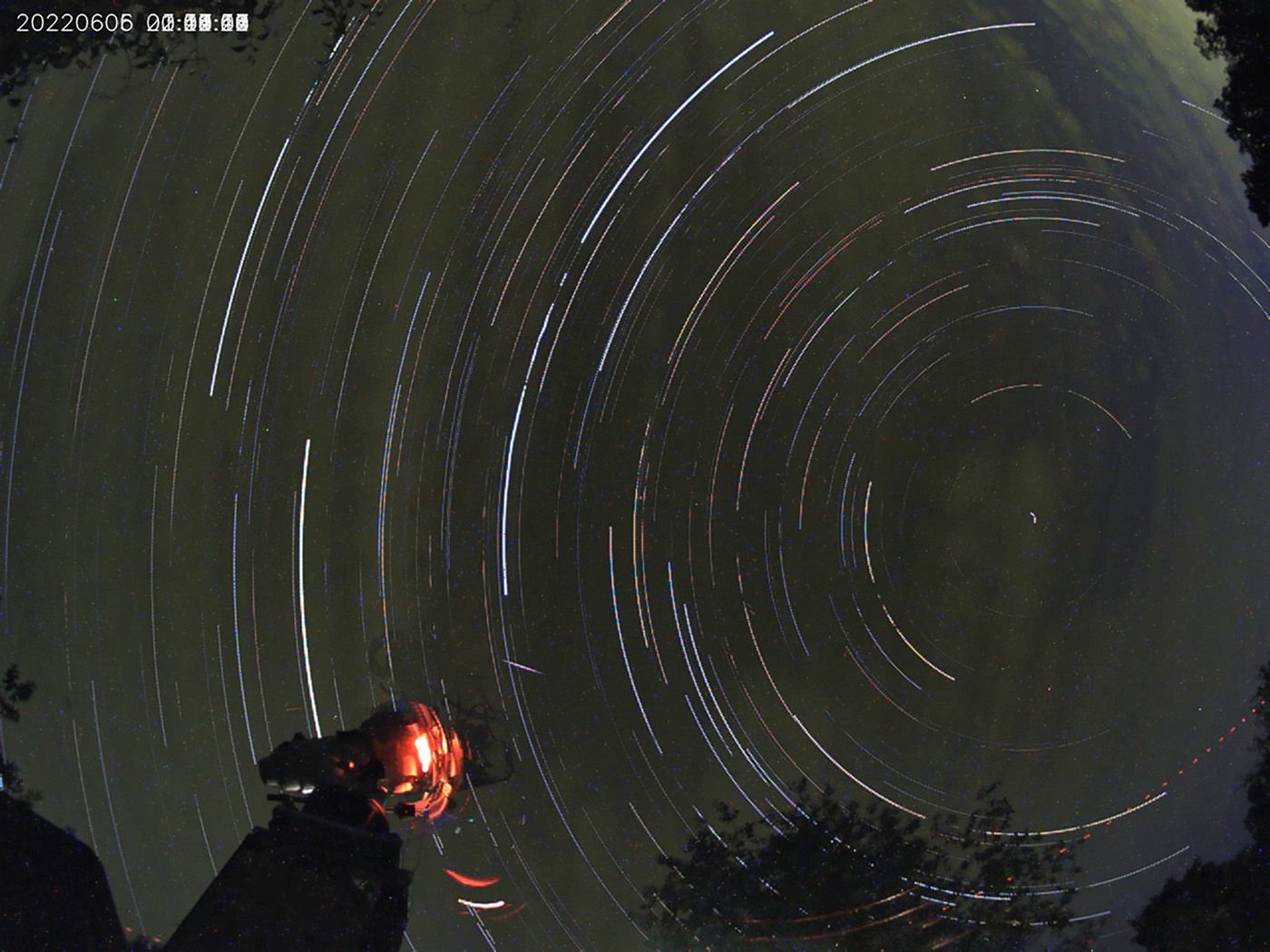
What did last night look like?
Here's last night's astro-imaging session captured in one image. You can see a couple batches of clouds swept through at different times. The AllSky cam, sitting on a concrete block next to the telescope, takes pictures all night long with a 6mm super-wide-angle lens. In the morning there are a bunch of time-lapse images of the night, and in this "star trails" image, all the separate images from the night are merged into one image, showing the earth's rotation. You can also see some red LED arcs (bottom left) showing where my telescope slewed or tracked a target across the sky. That bright quarter-circle in the center of the rings of star trails is Polaris, the "North Star", alpha Ursae Minoris. Polaris is a few degrees off the NCP--North Celestial Pole, a point in space that marks our planet's rotation in the northern hemisphere (you'll see the SCP in the southern hemisphere, although there isn't a bright star nearby like Polaris). Here's how to think about this: if you extended an imaginary line out from Earth's axis of rotation and you're north of the equator, the line would end, from our perspective, right there at the NCP. You can see that the star Polaris isn't dead-on with the NCP because it too rotates around it.
Posted June 6, 2022
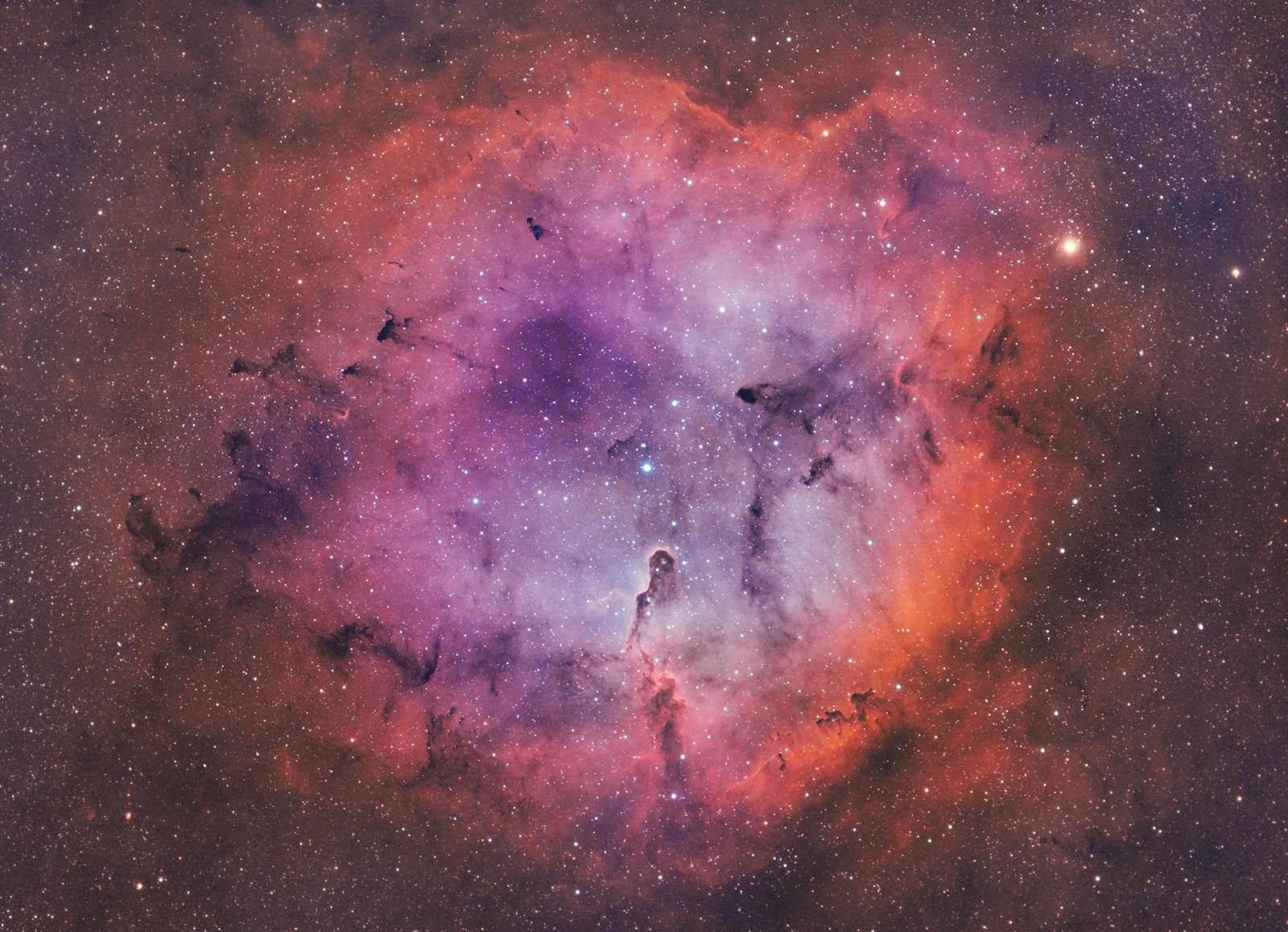
IC 1396 (Elephant's Trunk Nebula) in Cepheus
I captured another four hours of data last night, this time in OIII, and here's the processed version with combined Hydrogen-alpha and Oxygen 3 data. Oxygen is in blue (~504nm) and Ha (~656nm) is in red. Imaging Notes: 64 x 240 second subs in Hydrogen-alpha, 72 x 240 second subs in OIII, stacked in DSS, over 9 hours of data. Gear: William Optics SpaceCat51 Apo Refractor, ZWO ASI1600MM-Pro mono camera, Antlia Pro 3nm Ha, OIII filters, Sky-Watcher EQ6R Pro equatorial mount.
Posted June 5, 2022
Looks like clear skies tonight!
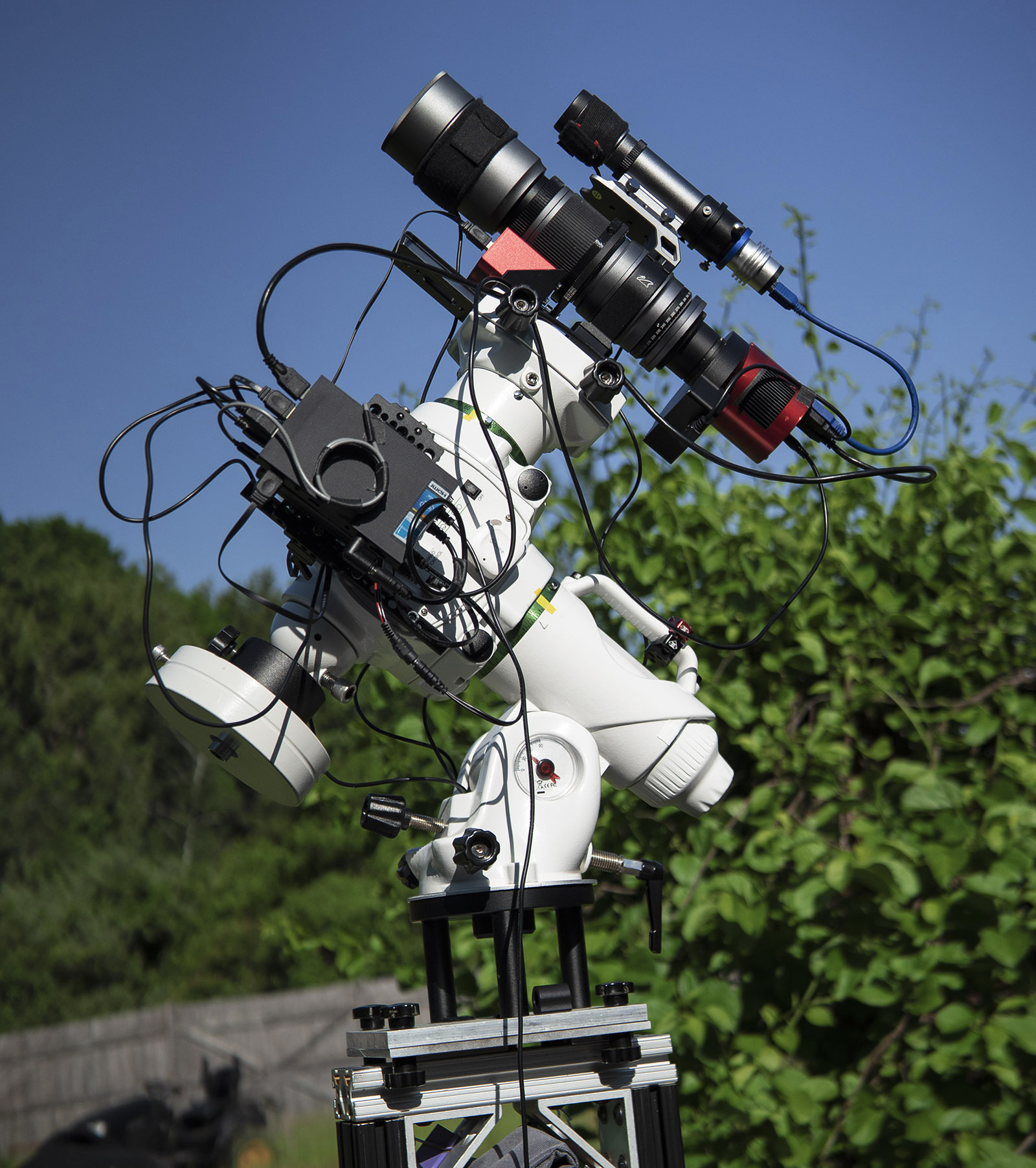
I haven't decided on targets, but I'm thinking narrowband oxygen data, either IC 1396 (Elephant's Trunk Nebula) and/or the Squid Nebula (OU4) in Sharpless 2-129, the Flying Bat Nebula. I have the wider-field narrowband setup going: William Optics SpaceCat 51 apochromatic refractor, ZWO ASI1600MM-Pro monochrome camera with 3nm Antlia filters, all on the Sky-Watcher EQ6-R Pro mount.
Posted June 4, 2022
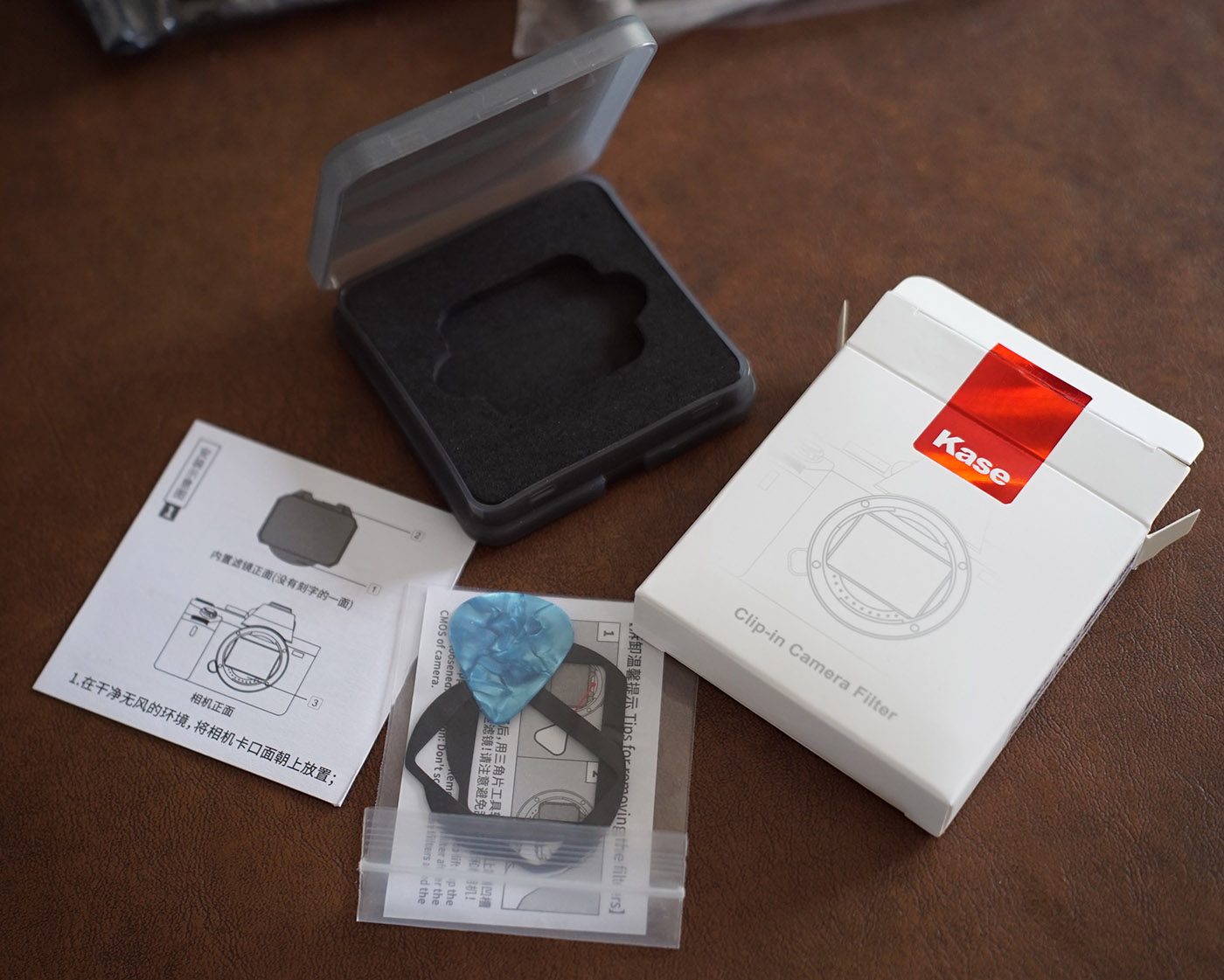
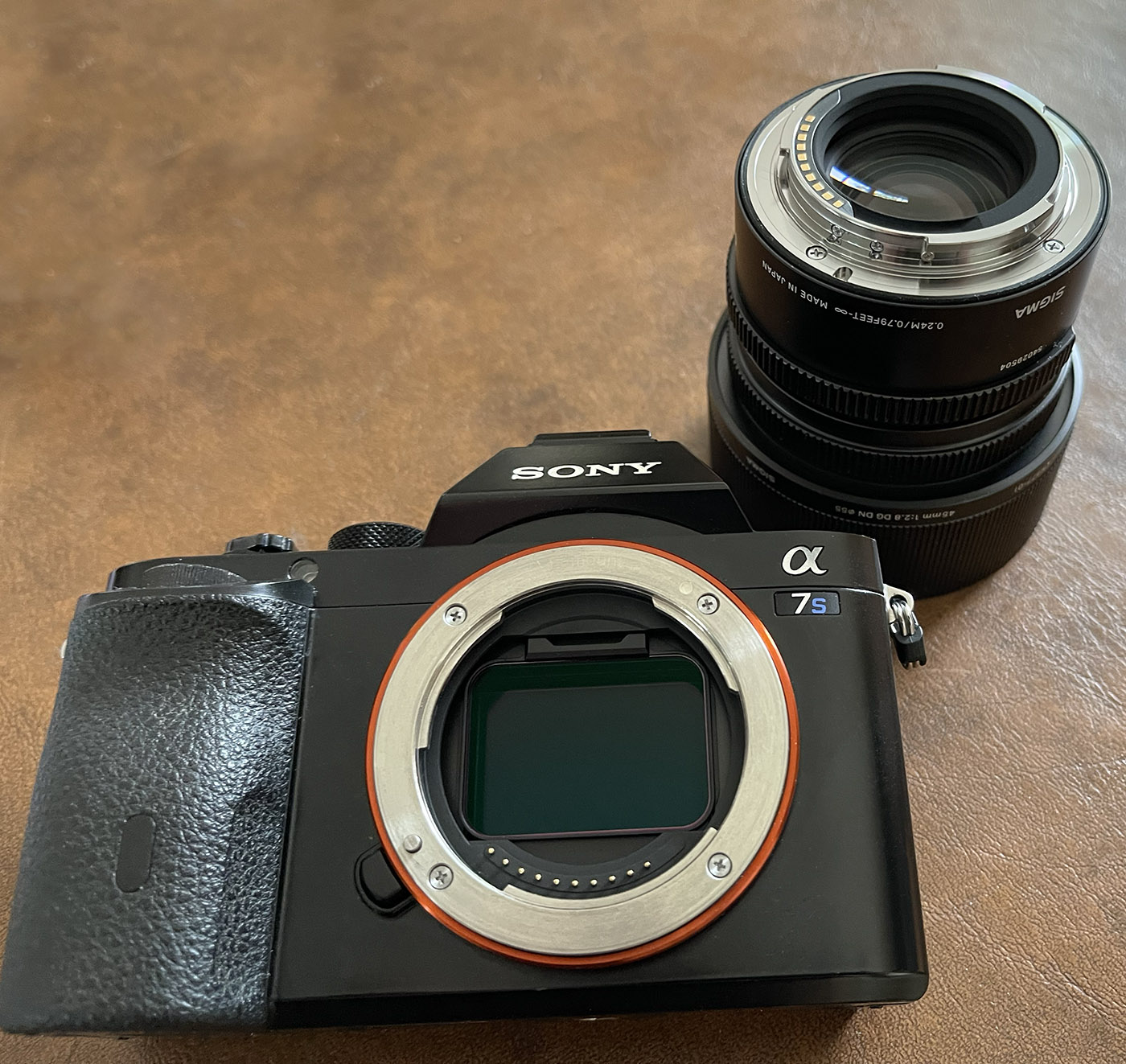
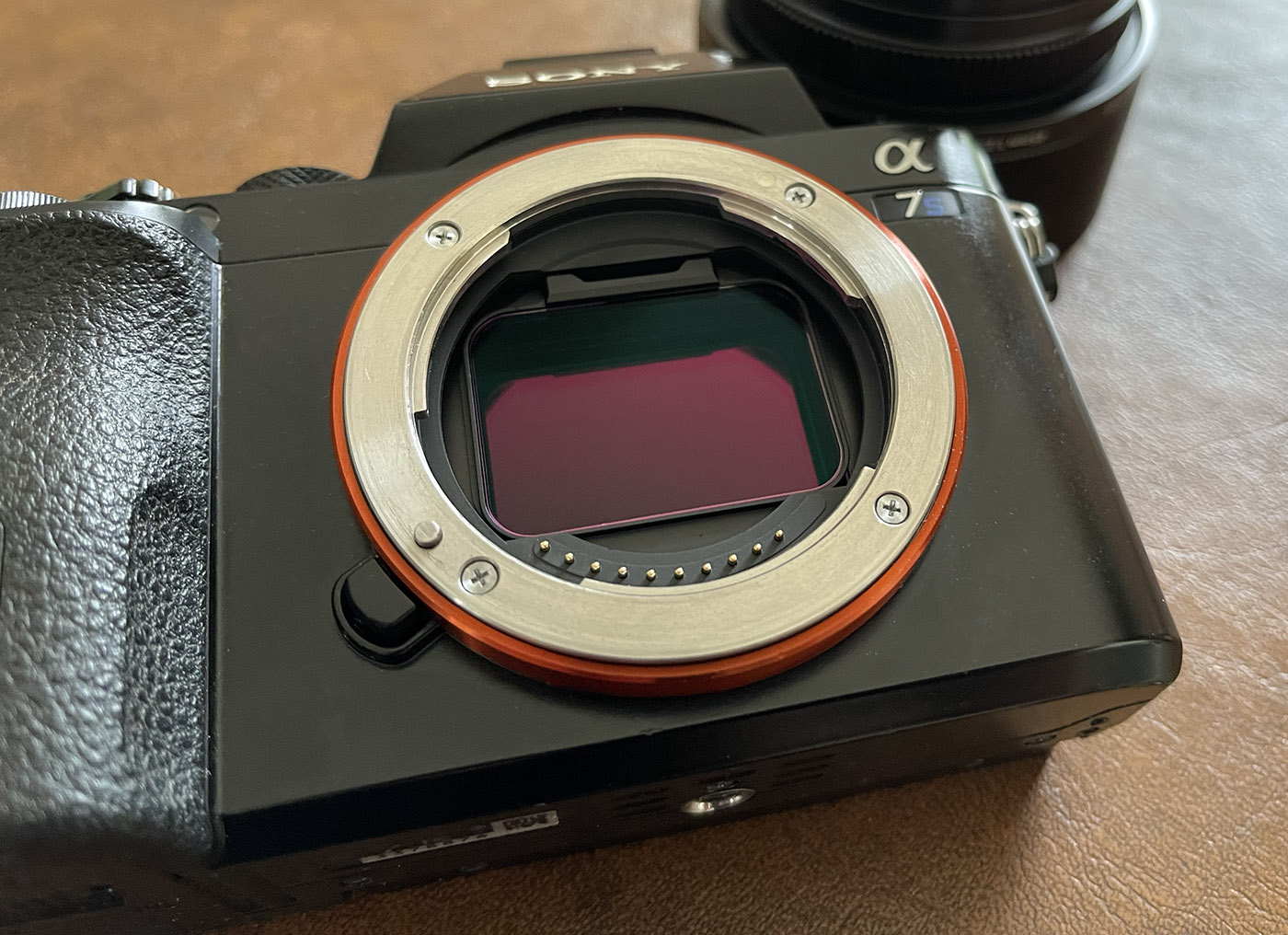
Kase Clip-in Light Pollution Filter for the Sony A7s
I couldn't find the spectrum graph data specifically for the Kase Light Pollution/Neutral Night filter, but I believe it is similar to the dozen of others on the market created for the same purpose—to reduce a range of wavelengths in the yellow and greens.