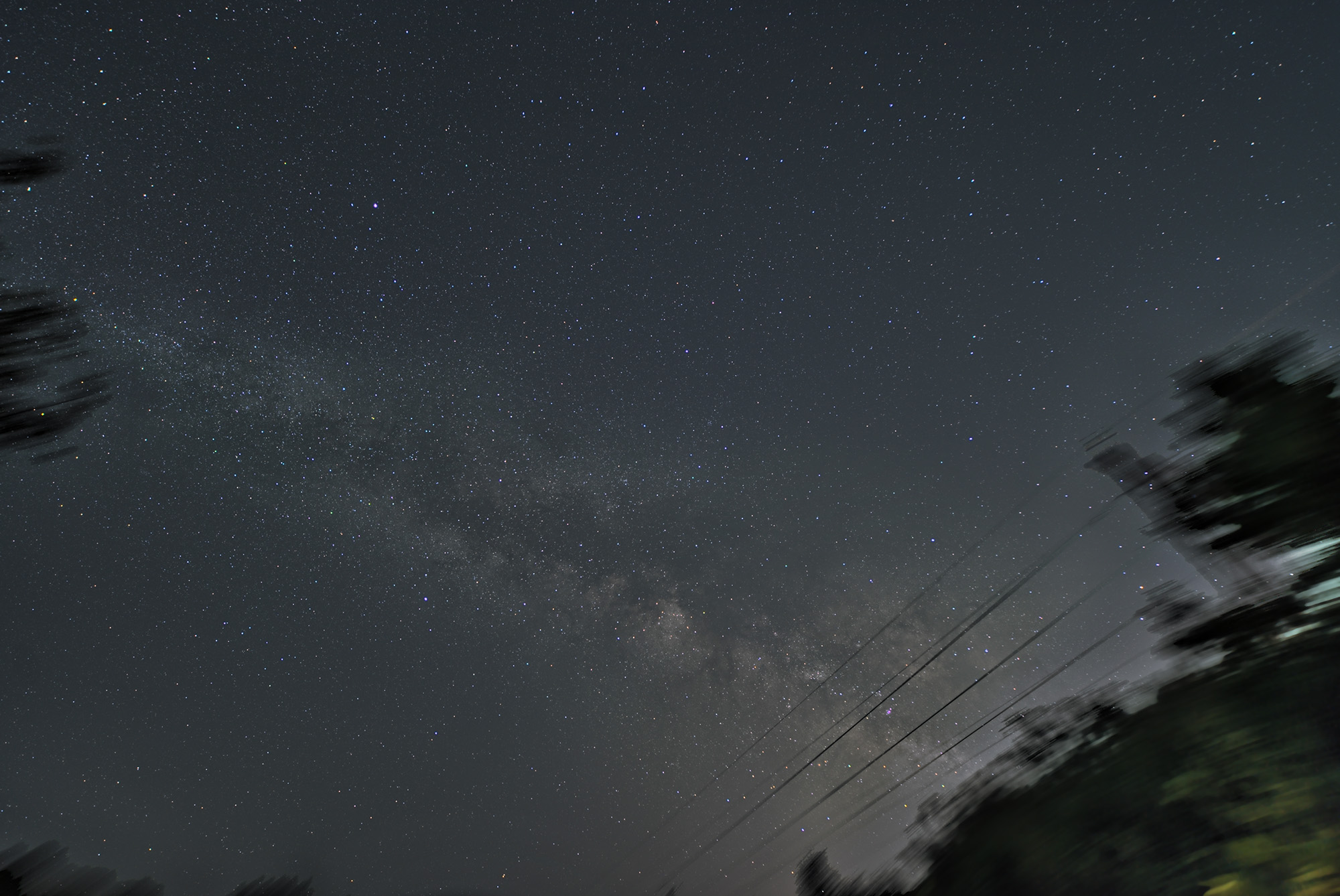
Widefield testing in the backyard
One of my tests from last night. This is 55 stacked 10 second exposures at ISO 3200 on the Sony A7s and the Irix 15mm f/2.4. (Stacked in Affinity Photo). The SkyGuider has the camera locked on the stars and you can see the trees and transmission lines in the foreground flying by. That's the rotation of the earth in the roughly 10 minutes I spent taking 55 exposures.
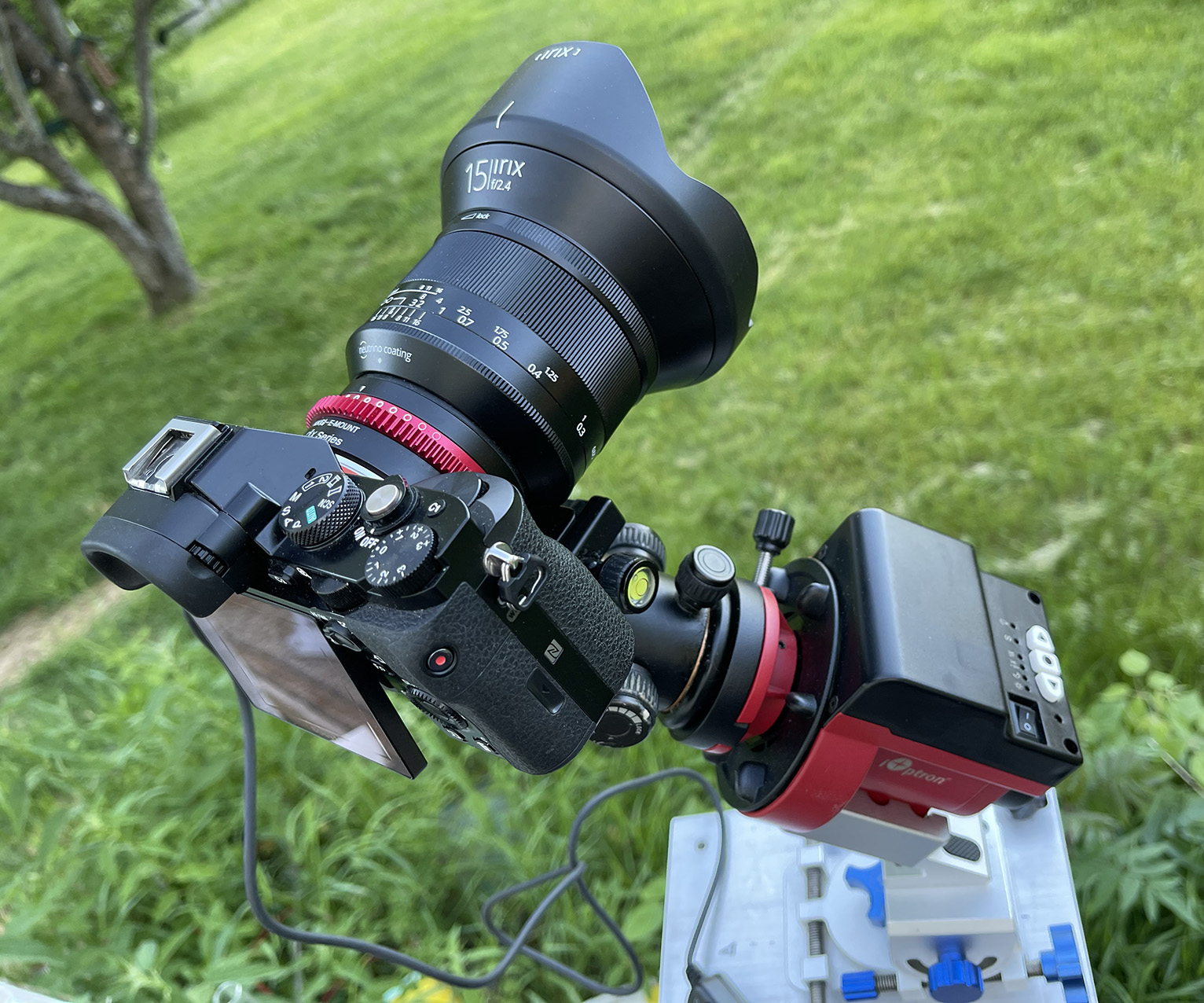
Here's setup. The Optron SkyGuider Pro with the Sony A7s + Irix 15mm f/2.4. I was just doing some widefield star tracking tests last night--ended up going into the early morning hours. The Milky Way didn't hit 30° in the east until 11pm.
Posted May 30, 2022
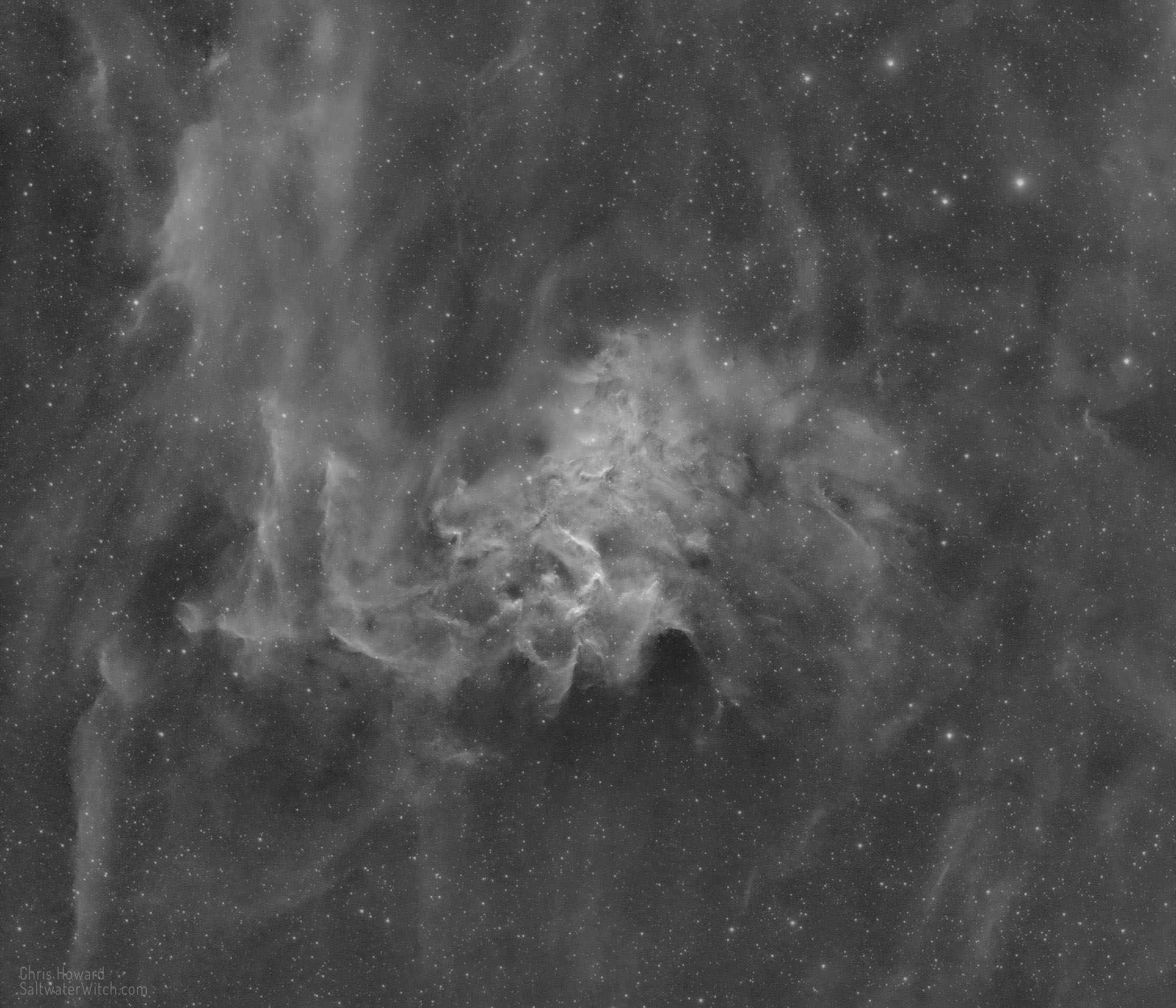
The Flaming Star in Ha
The Flaming Star Nebula (IC 405, SH 2-229, Caldwell 31) is a massive emission nebula and reflection nebula, 1500 lightyears away in the constellation Auriga. IC 405 is about 5 lightyears across, so that's roughly 30 trillion miles (47 trillion kilometers) of dense clouds of ionized hydrogen. With the stars in the field of view removed (or just de-emphasized) you can really see the motion in the clouds of hydrogen and interstellar dust. It is the intense radiation and stellar winds from energetic stars (especially AE Aurigae, a rather large blue O-type main sequence star) that drive these clouds through space, but that motion and the complexity of the cloud structures is not as easy to see with all the stars in the way. Imaging Notes: 60 x 240sec subs stacked in DSS. William Optics GT81 Apo refractor, 6nm Astronomik Ha filter, ZWO ASI 1600MM-Pro monochrome camera. Star removal: StarNet++
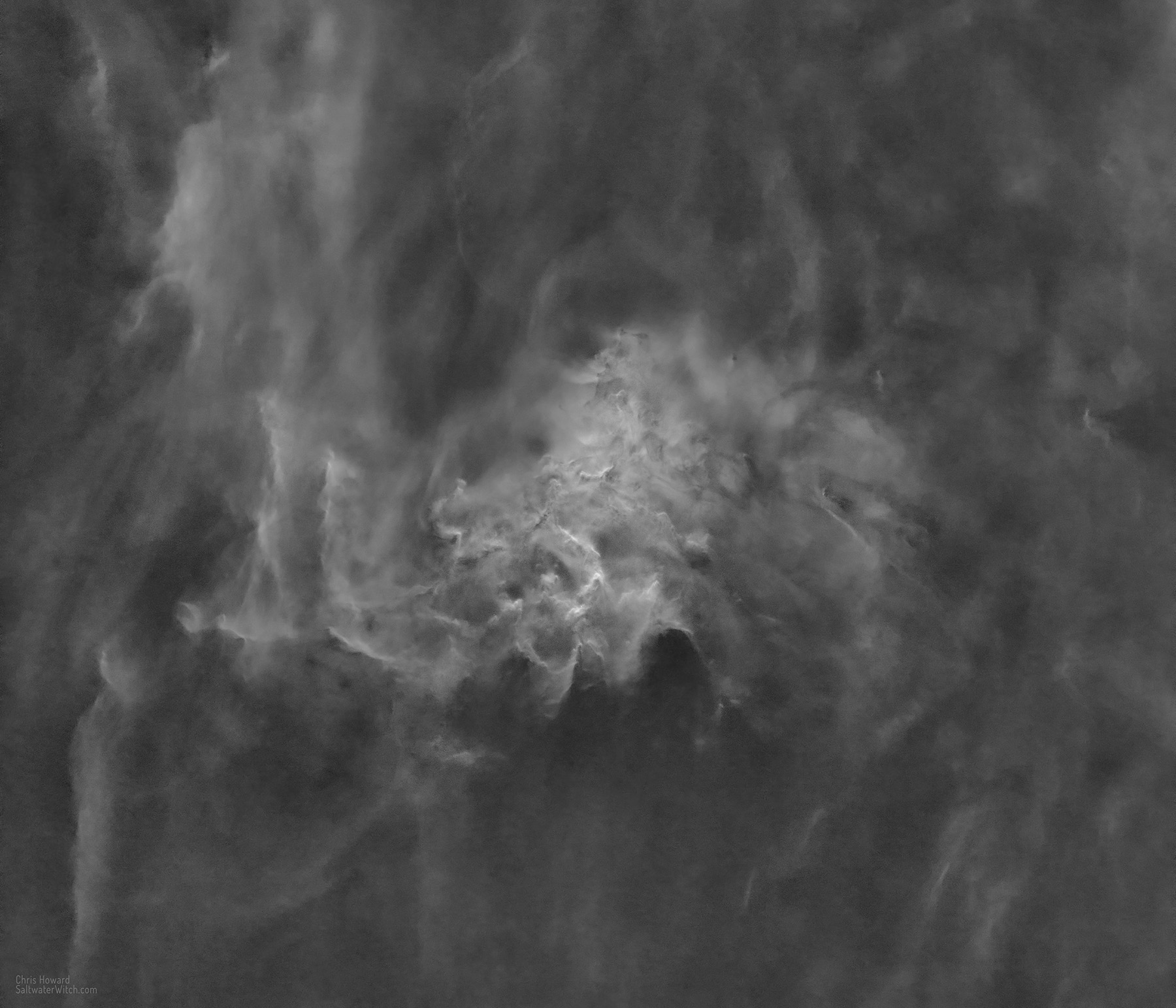
Here's the same image with the stars de-emphasized. I think the thing to keep in mind is that most of these stars are between us and IC 405, not in the same field and distance. With most astronomy/planetarium apps you can configure magnitude of stars, but I don't think any have the ability to show stars and other objects by distance, or a range of distances. I think that would be interesting, and it would give astrophotographers a way to remove all stars except those in the same region with similar distance to the object being presented.
Posted May 26, 2022
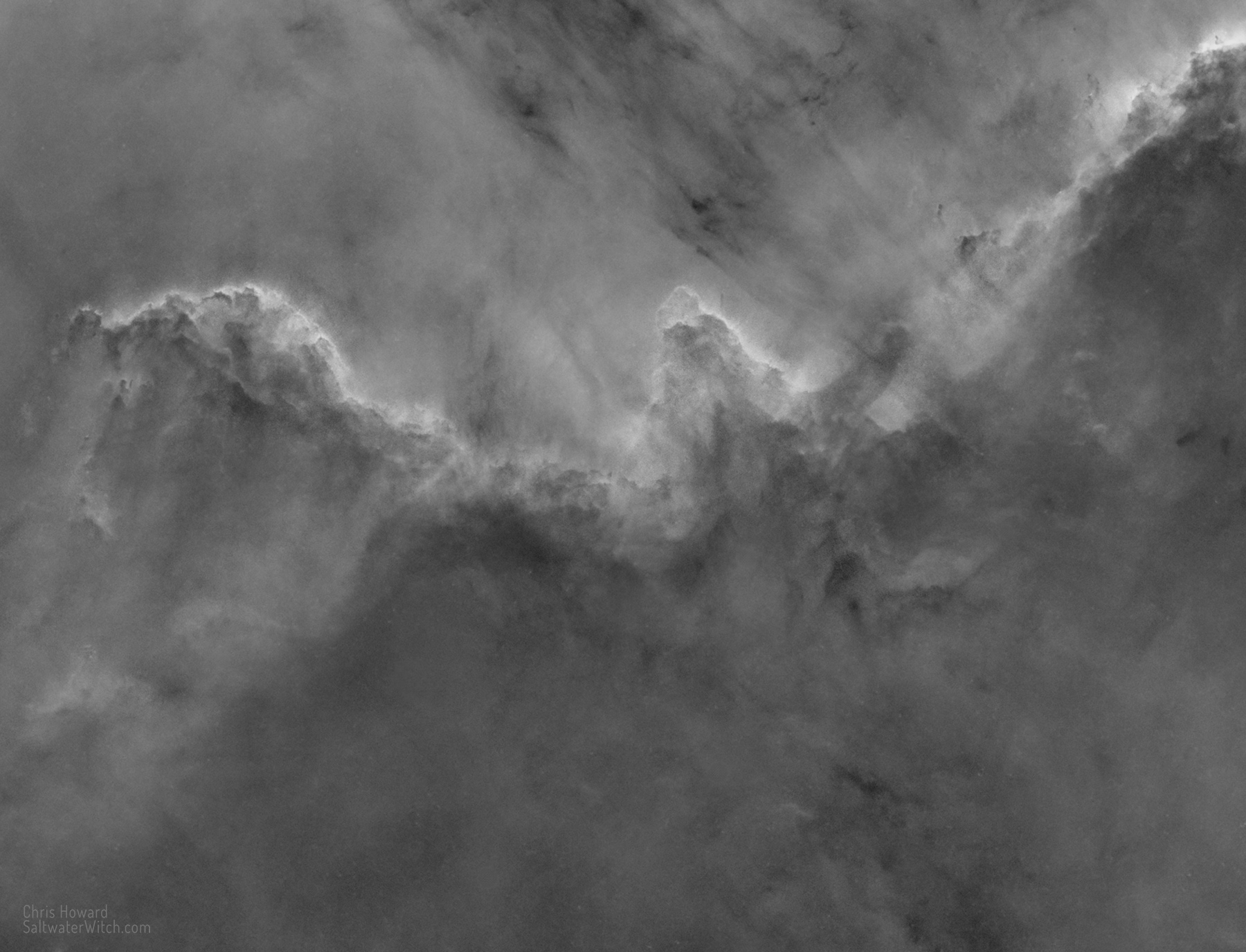
Cygnus Wall in Hydrogen-alpha
The "Cygnus Wall" in the North America Nebula (NGC 7000, Caldwell 20) in the constellation Cygnus. William Optics GT81 Refractor, Astronomik 6nm Ha filter, ZWO ASI1600MM-Pro monochrome camera. Although not a lot of stars in the field of view, I used Starnet to remove them. On composition of the Wall: mostly hydrogen with some sulfur, going by imaging data I've seen and collected--across hydrogen, sulfur, oxygen bandpasses. This is an ionization front where the density of the dust and gasses builds until the most concentrated regions collapse to form stars--and because of this, there probably isn't much in the way of heavier elements. Everything captured in this specific image is all within the hydrogen emission line around 656nm. Hydrogen--that stuff is everywhere!
Posted May 25, 2022
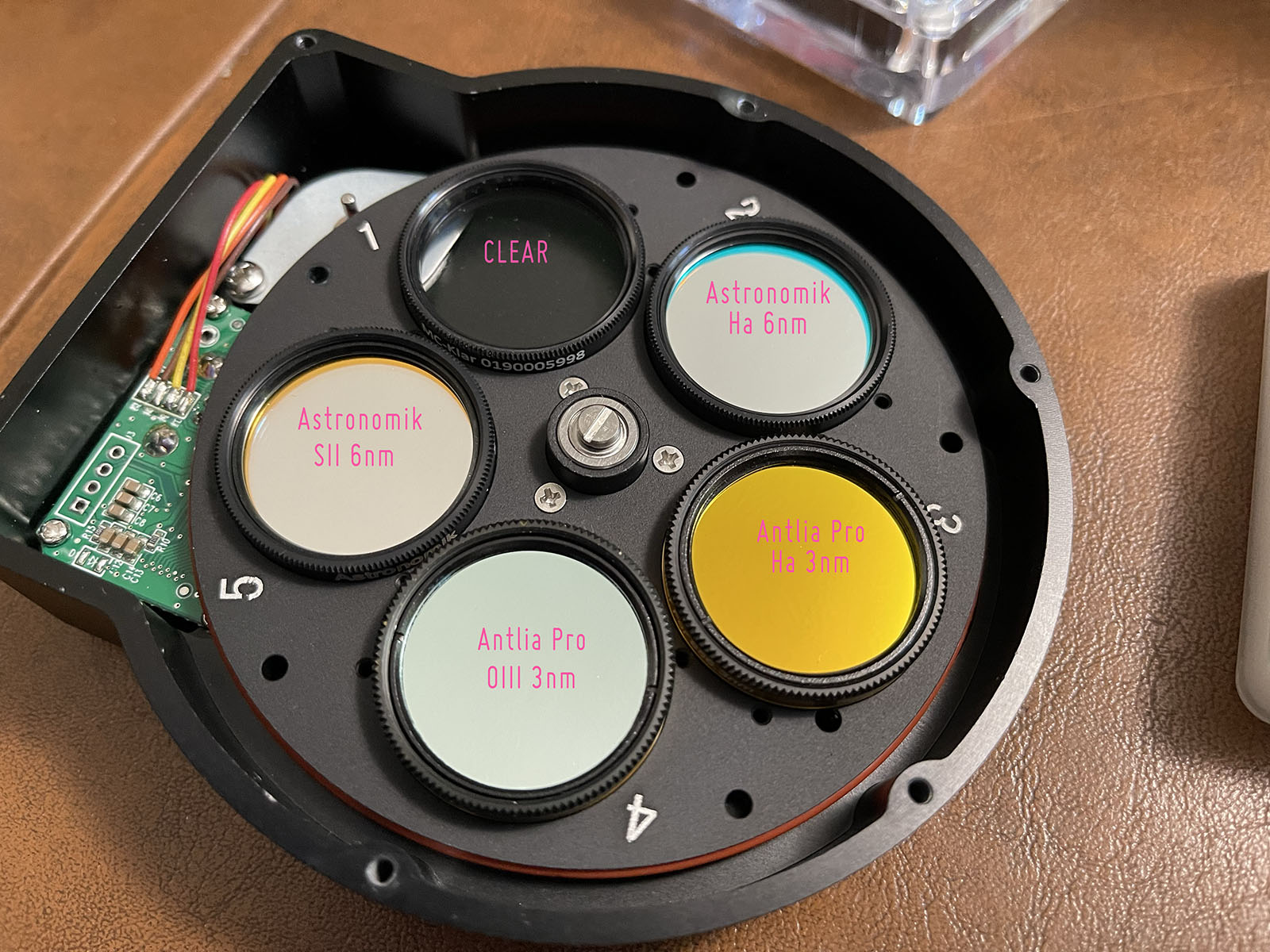
ZWO EFW Update
I swapped the 6nm Astronomik OIII filter for the 3nm Antlia Pro. Now I need some clear night skies to try it out!
Posted May 24, 2022
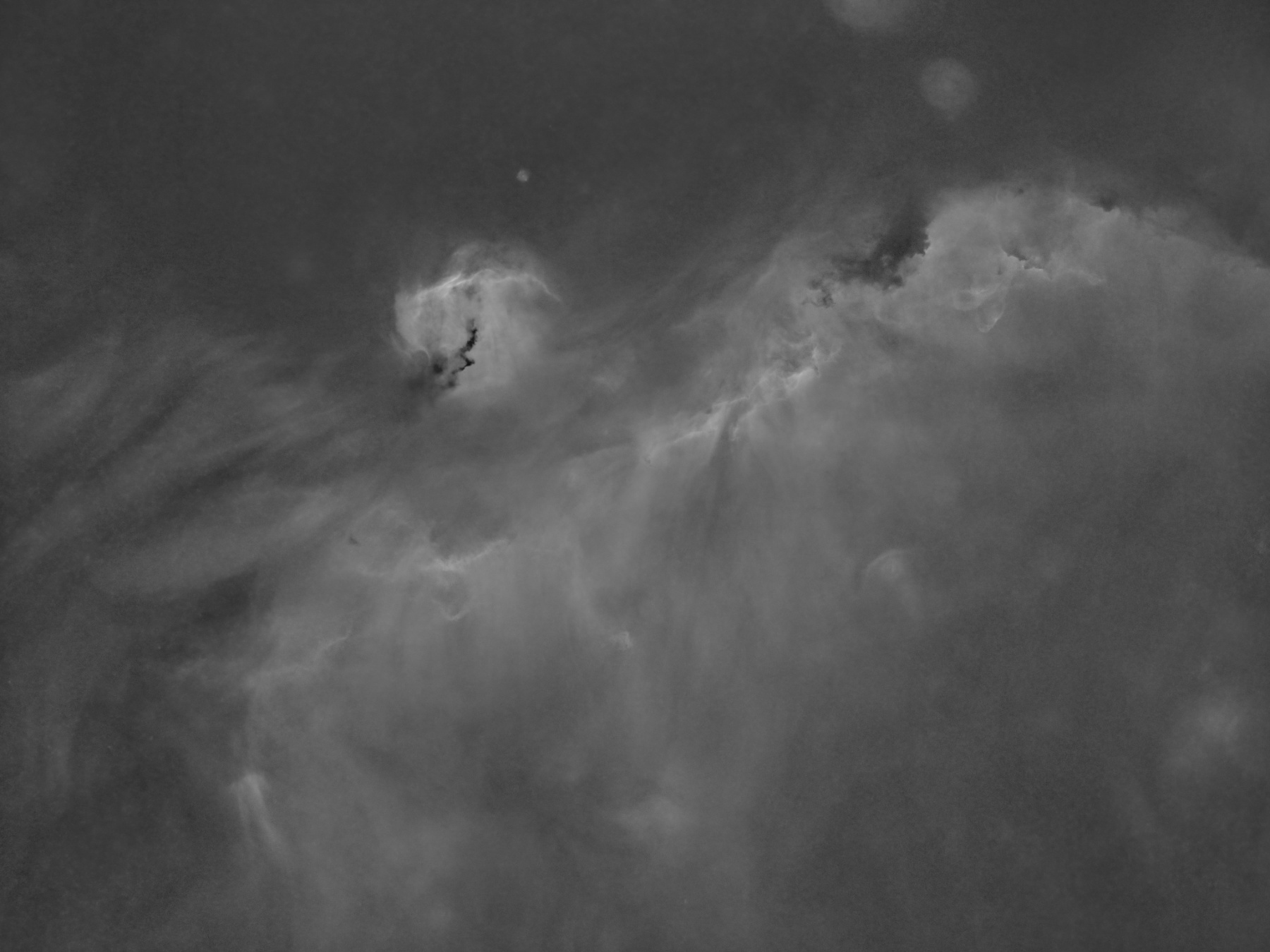
Starless Parrot Nebula and Seagull Nebula
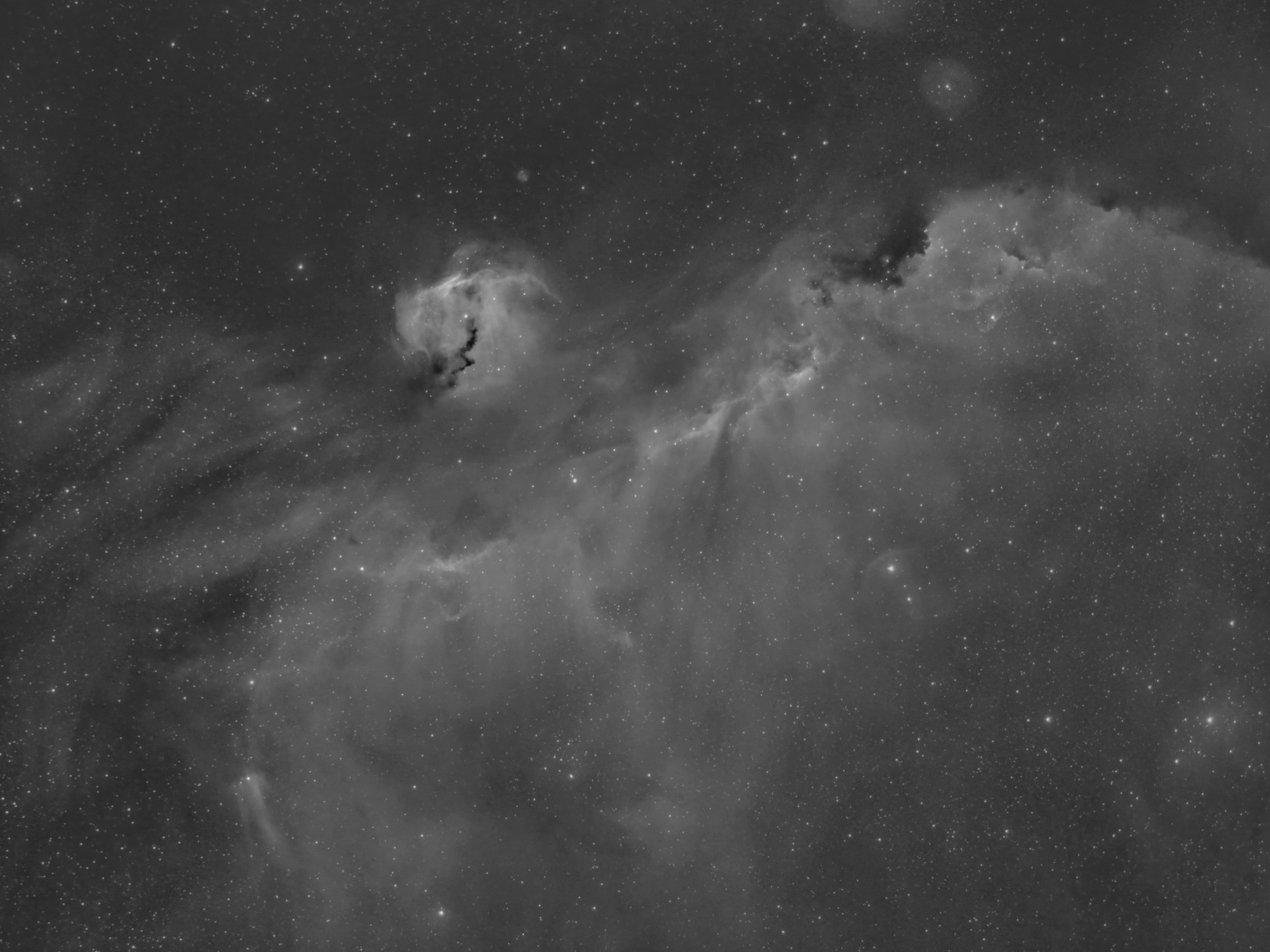
Narrowband NGC 2327 "Parrot Nebula" and IC 2177 "Seagull Nebula" with the stars removed. NGC 2327 and IC 2177 are part of a large HII emission region between the constellations Monoceros and Canis Major, 3700 light-years away. The outstretched wings of the "Seagull Nebula" (SH2-296, IC 2177) are over 100 lightyears in length. The "Parrot Nebula" (IC 2327, SH2-292, GUM 1) is the bright boxy structure in the middle with the dark jagged dust lane running up the center. Imaging Notes: 60 x 240sec subs stacked in DSS and processed in PSCC2022. William Optics GT81 Apochromatic Refractor 392mm at f/4.7, Moonlite focuser, ZWO ASI1600MM-Pro monochrome camera, Astronomik 6nm Ha filter, SkyWatcher EQ6-R Pro mount, Controller: Raspberry Pi 4 running INDI/KStars/Ekos.
NGC 2327, IC 2177 with stars:
Posted May 21, 2022
The Iris Nebula
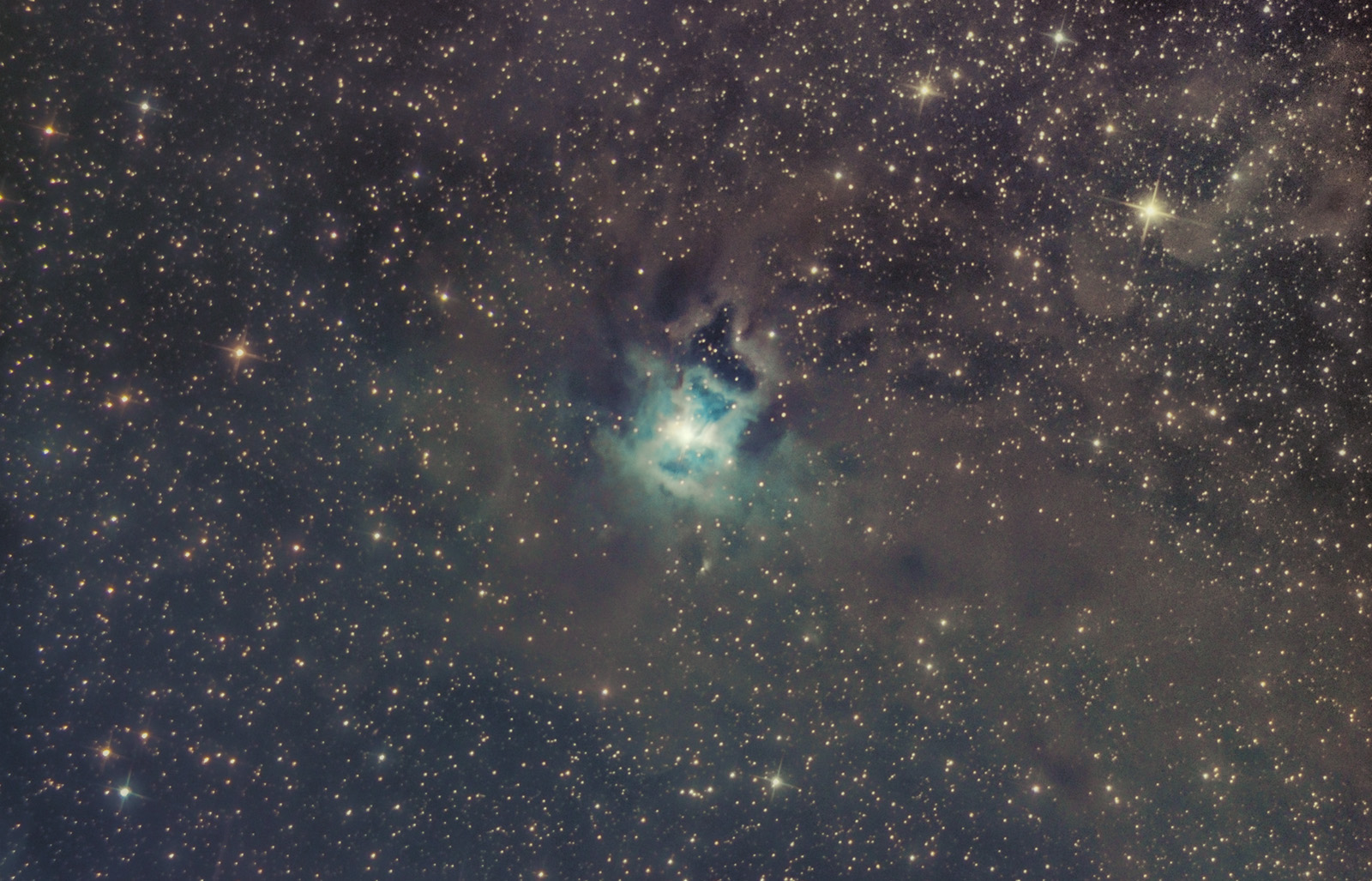
The Iris Nebula (NGC7023, Caldwell 4) is a reflection nebula in Cepheus. Notes: 51 x 240 second subs. Apertura 8 inch f/4 800m FL Imaging Newtonian, ZWO ASI071MC color camera, GSO Coma Corrector, SkyWatcher EQ6-R Pro mount, Stellarmate/Raspberry Pi 4 running INDI/Ekos/KStars.
Posted May 20, 2022
Simple Flat Frame Sleeve for the SpaceCat51
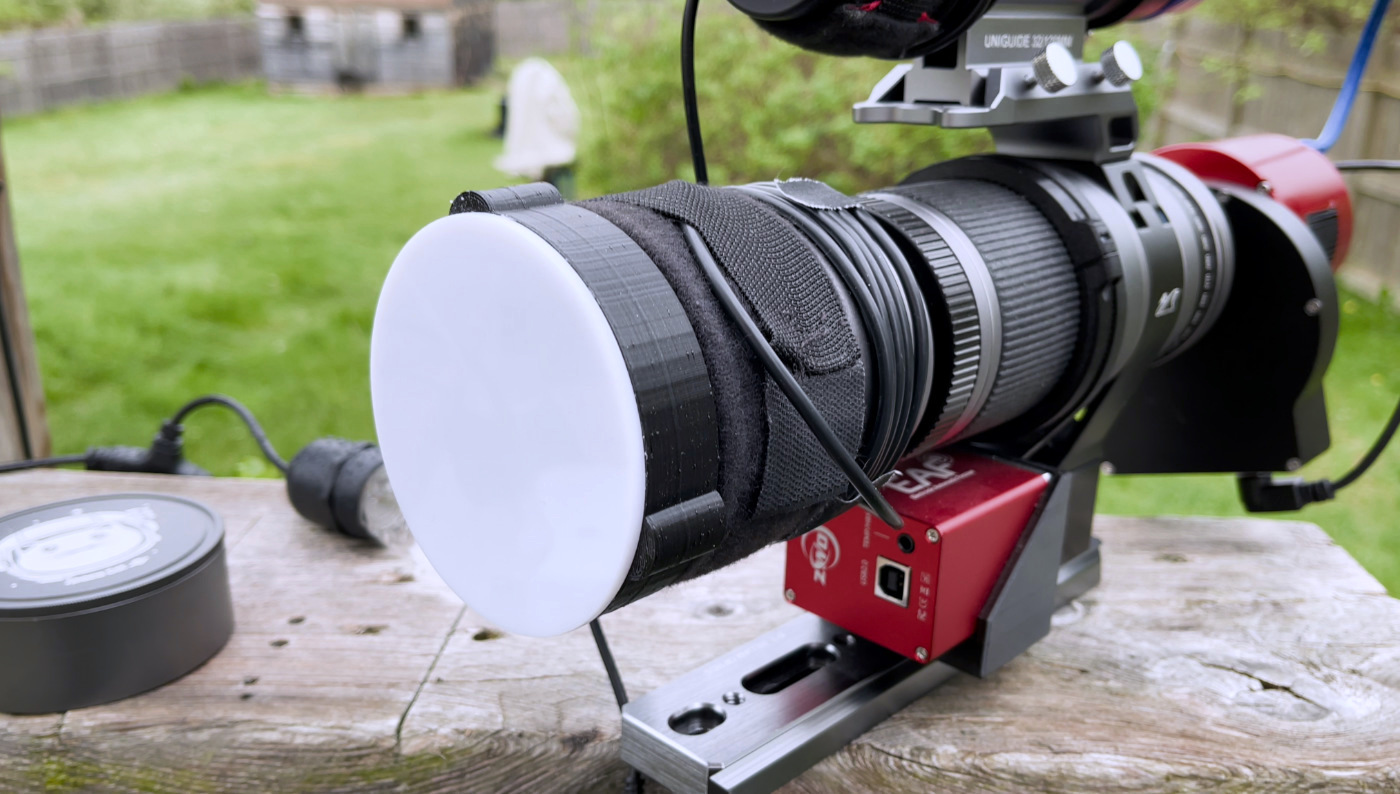
I've been thinking about portability for my astro setups, and low-power goes along with that. I have a light I use for flat frames, which will cover every scope I have, from the William Optics SpaceCat to the 8-inch Newt. But I also don't mind taking sky flats with a t-shirt or a couple pieces of paper. And these don't use any power.
Here's the scenario: The sun is setting and you've already setup your gear. You're sitting around waiting for the night to arrive. What else are you going to do but spend a little time taking calibration frames, flats when it's still a bit bright out, and dark flats, dark frames, and bias frames as the twilight fades—and if any of those are needed.
That's the idea anyway.
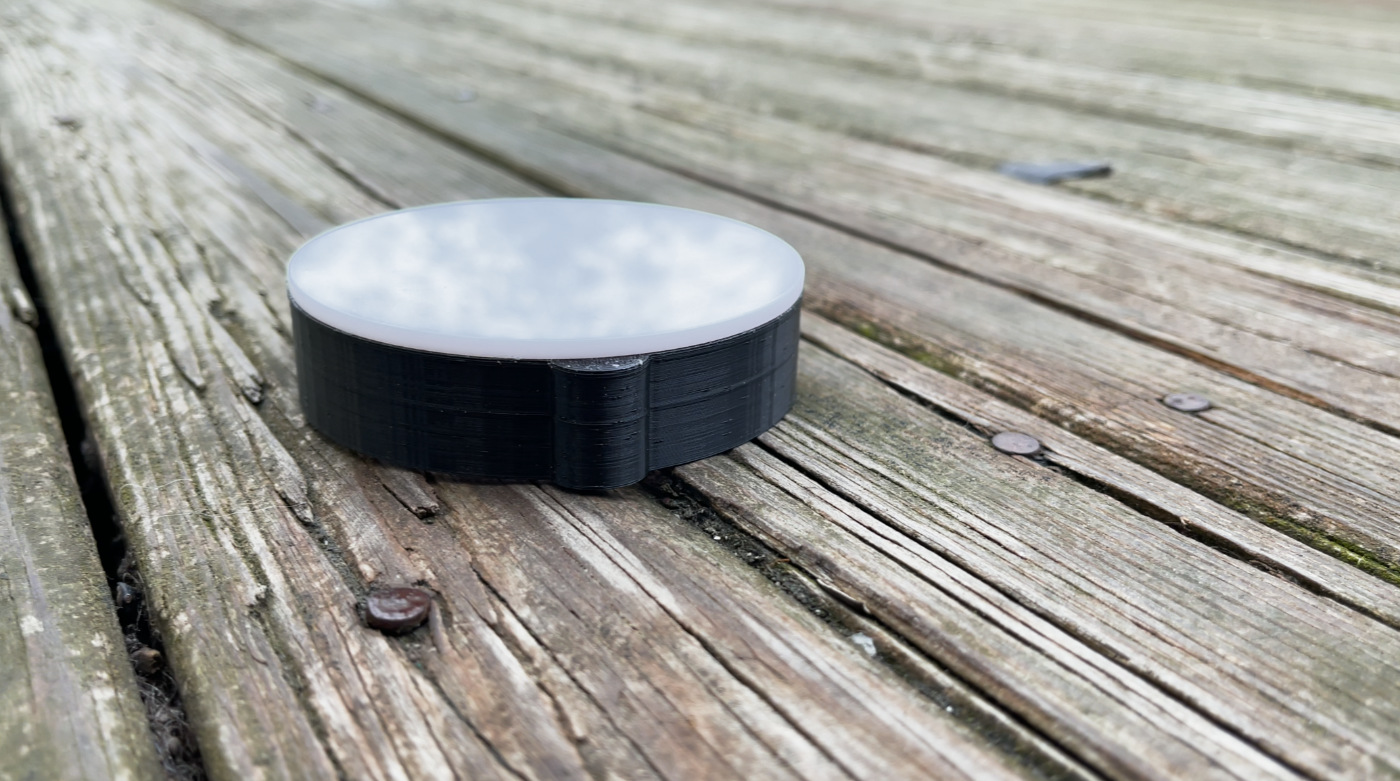
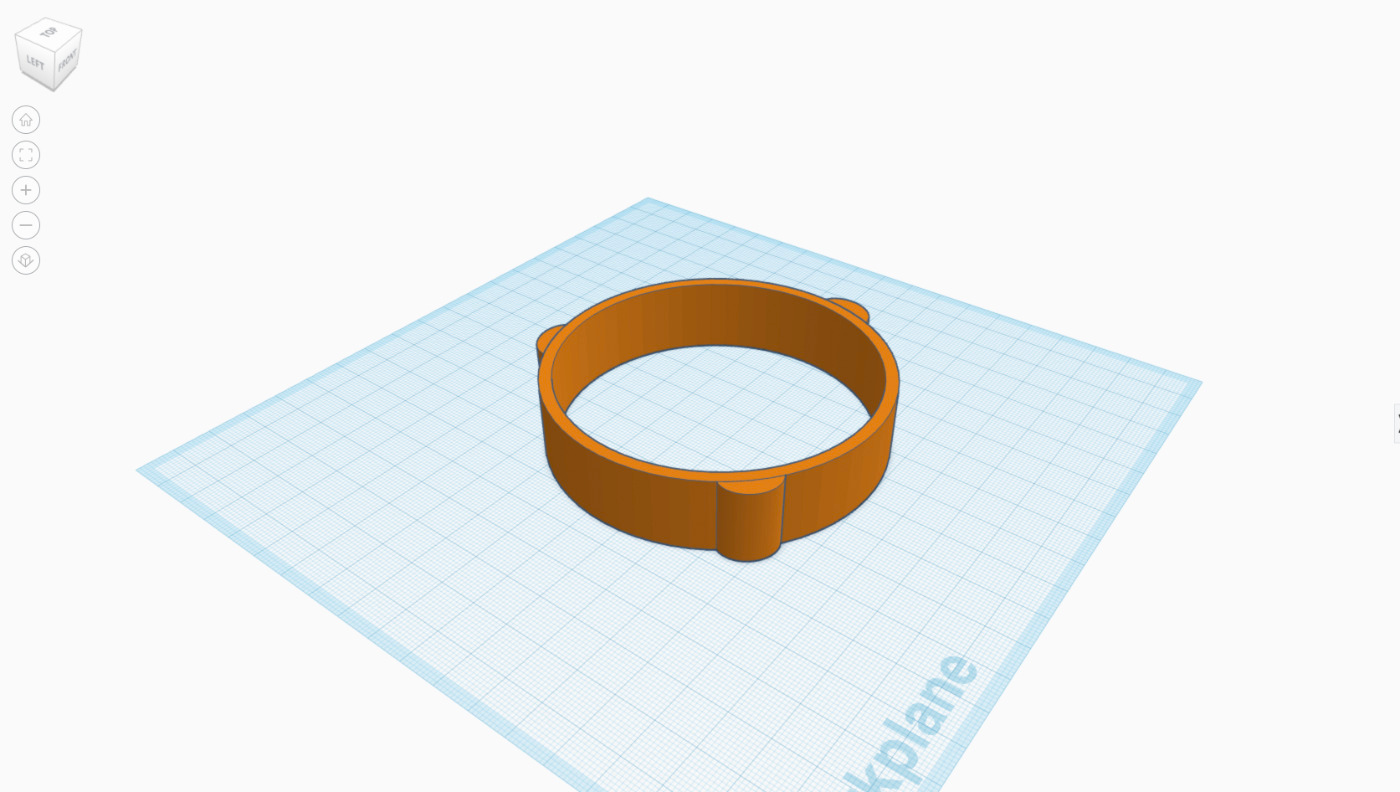
I spent a couple minutes in TinkerCad making a Flat Frame Sleeve for the SpaceCat I can print—inside diameter is 83mm. I ordered some 3 1/2 inch diameter, 1/8in thick "White Acrylic Round" things (Link below). I glued one of the acrylic circles to one side, and placed three pieces of adhesive-backed loop-side velcro strips inside the sleeve to make it fit snuggly on the end of the SpaceCat dew shield. ("loop side" is the soft side). Gluing: I used a Q-tip to put a thin coat of E6000 glue on one side of the printed sleeve and then pressed down the acrylic disc and let it dry overnight.
I've used this sleeve with the Flats Wizard in N.I.N.A. twice and it works well. Give it a try. Let me know what you think!
RedCat 5 Flat Sleeve Model - (Shared/Public) Tinkercad: https://www.tinkercad.com/things/47bakxyG37l
20PCS White Acrylic Round Circle, White Acrylic Rounds: https://www.amazon.com/dp/B081YHZGRL
E6000 Craft Adhesive: https://www.amazon.com/dp/B007TSYNG8

Posted May 16, 2022
Sony A7s Test with a Waxing Moon
There's a beautiful moon out there this evening! This is from my first set of test shots with my Sony A7s on the 1350mm f/9 Astro-Tech AT6RC.
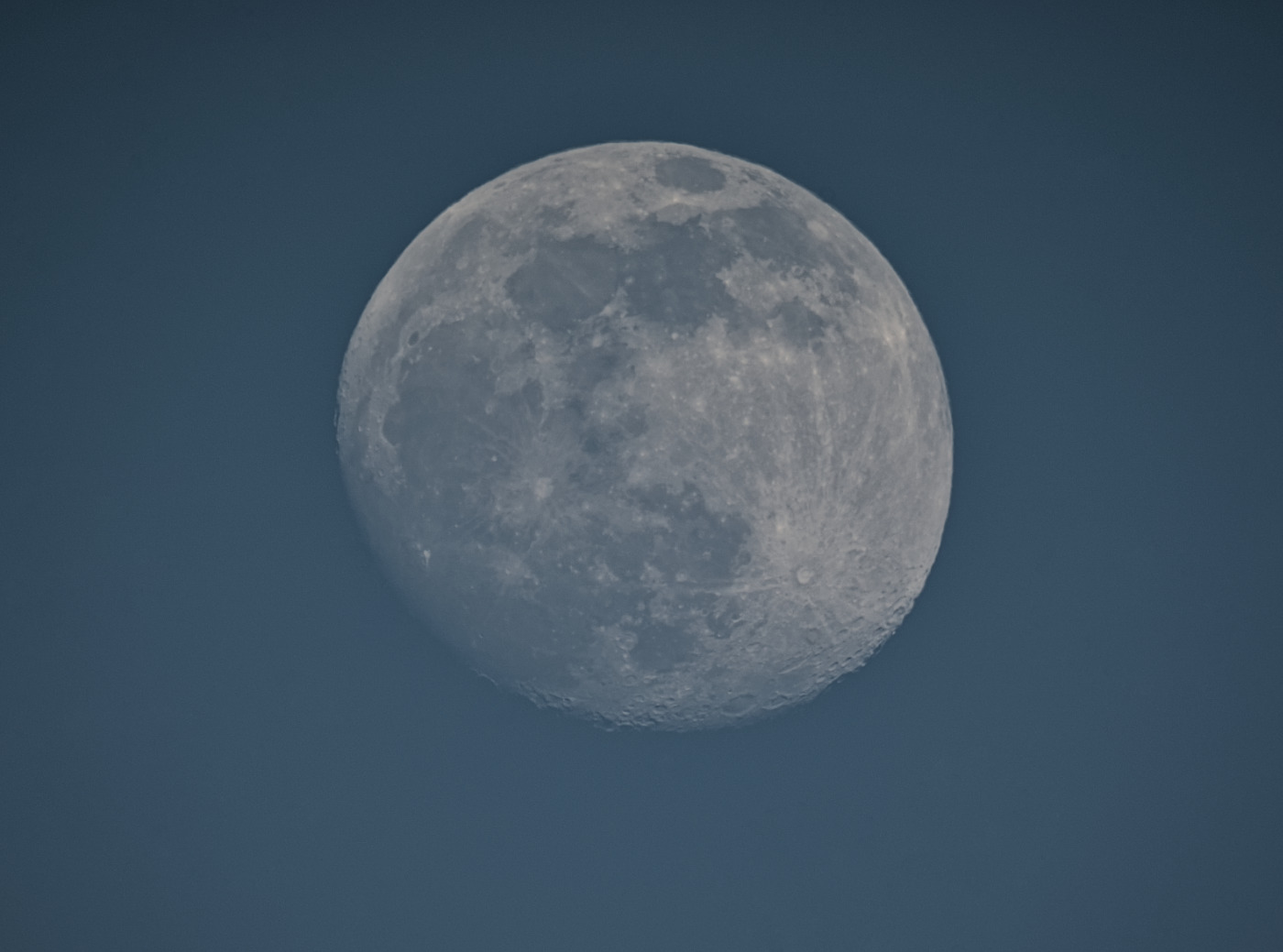
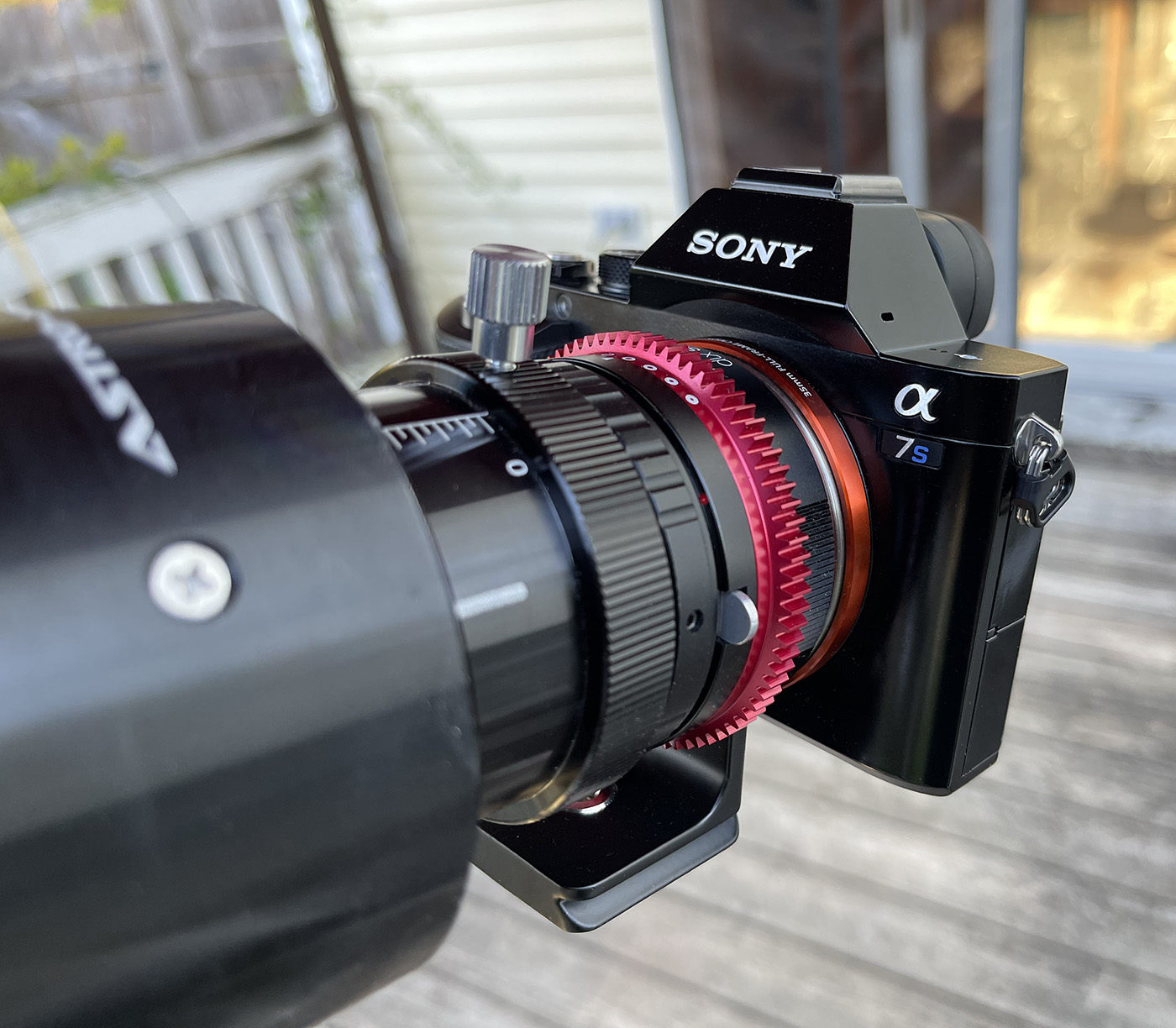
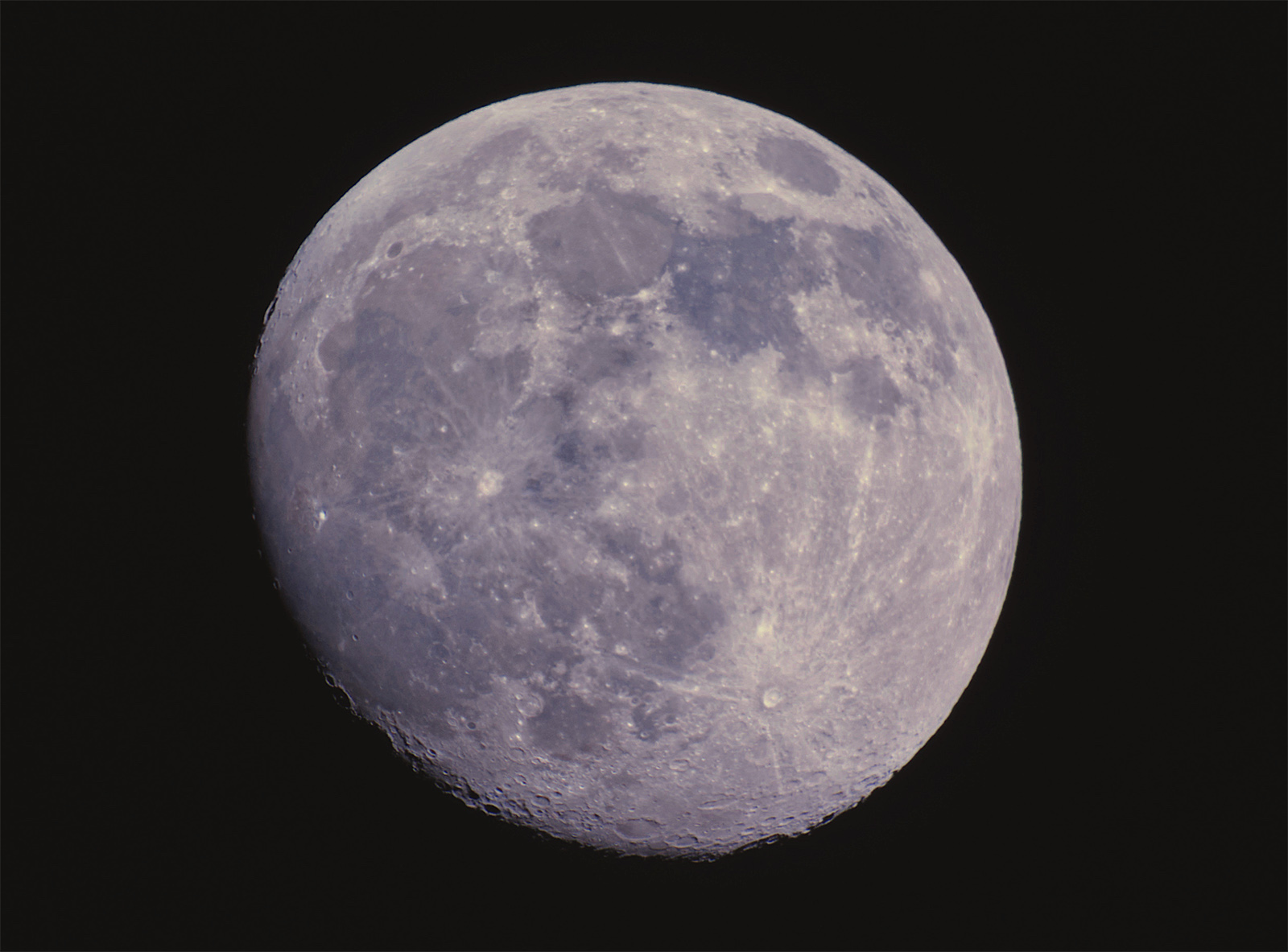
[Update: I shot this with the Sony A7S on the Astro-Tech AT6RC 1350mm f/9 scope while preparing for the total lunar eclipse May 15-16th, 2022. Unfortunately, the clouds moved in a day after taking this and didn't leave until after the eclipse. So I missed the main event, but did get some pretty nice test shots. This is a single exposure, f/9, 1/60 sec at ISO 400 with the Sony Full-frame A7S]. Here we are around 9:15 pm, this time with the Celestron UHC/LPR Filter:
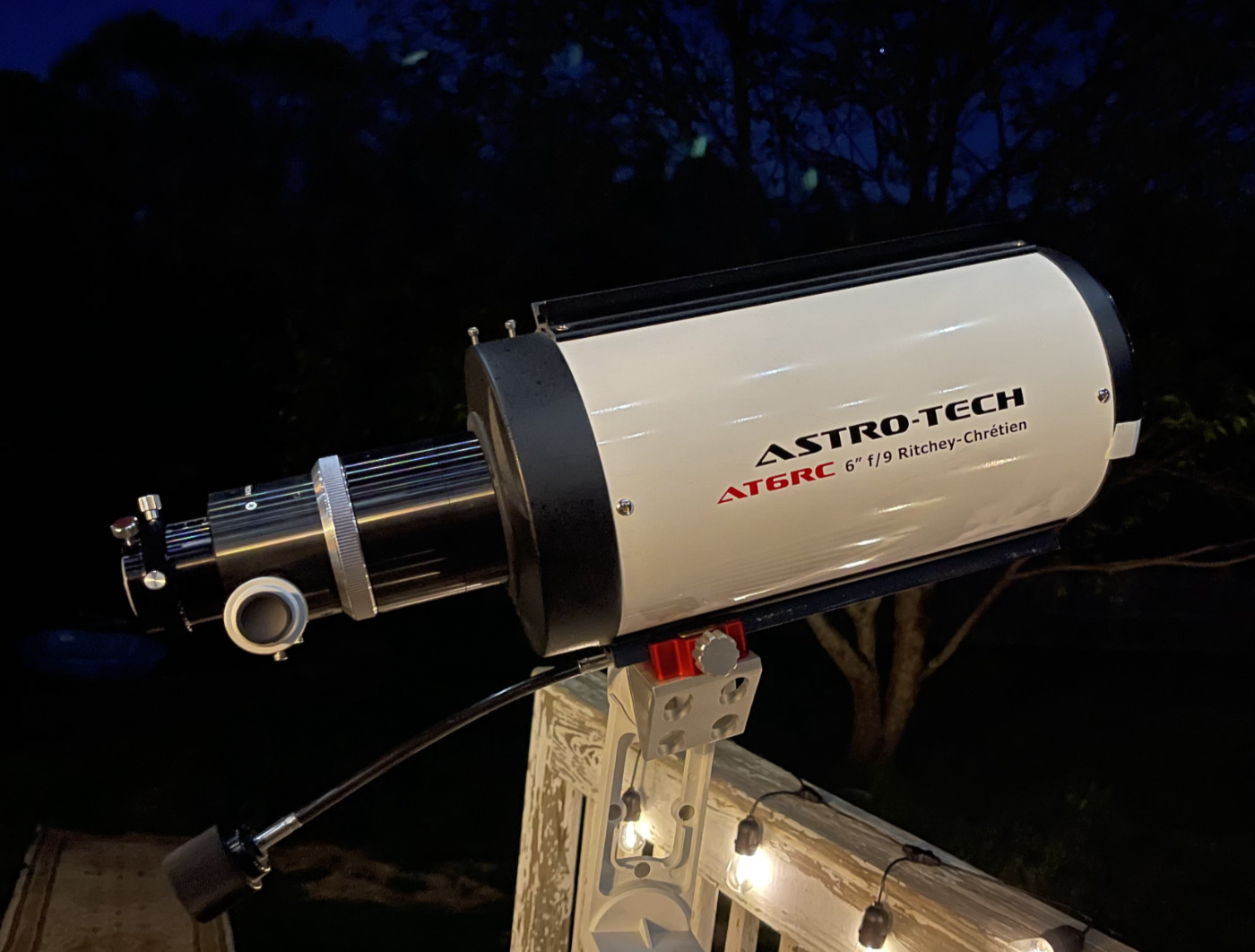
Here's the AT6RC scope: