First Light with the Apertura Newtonian
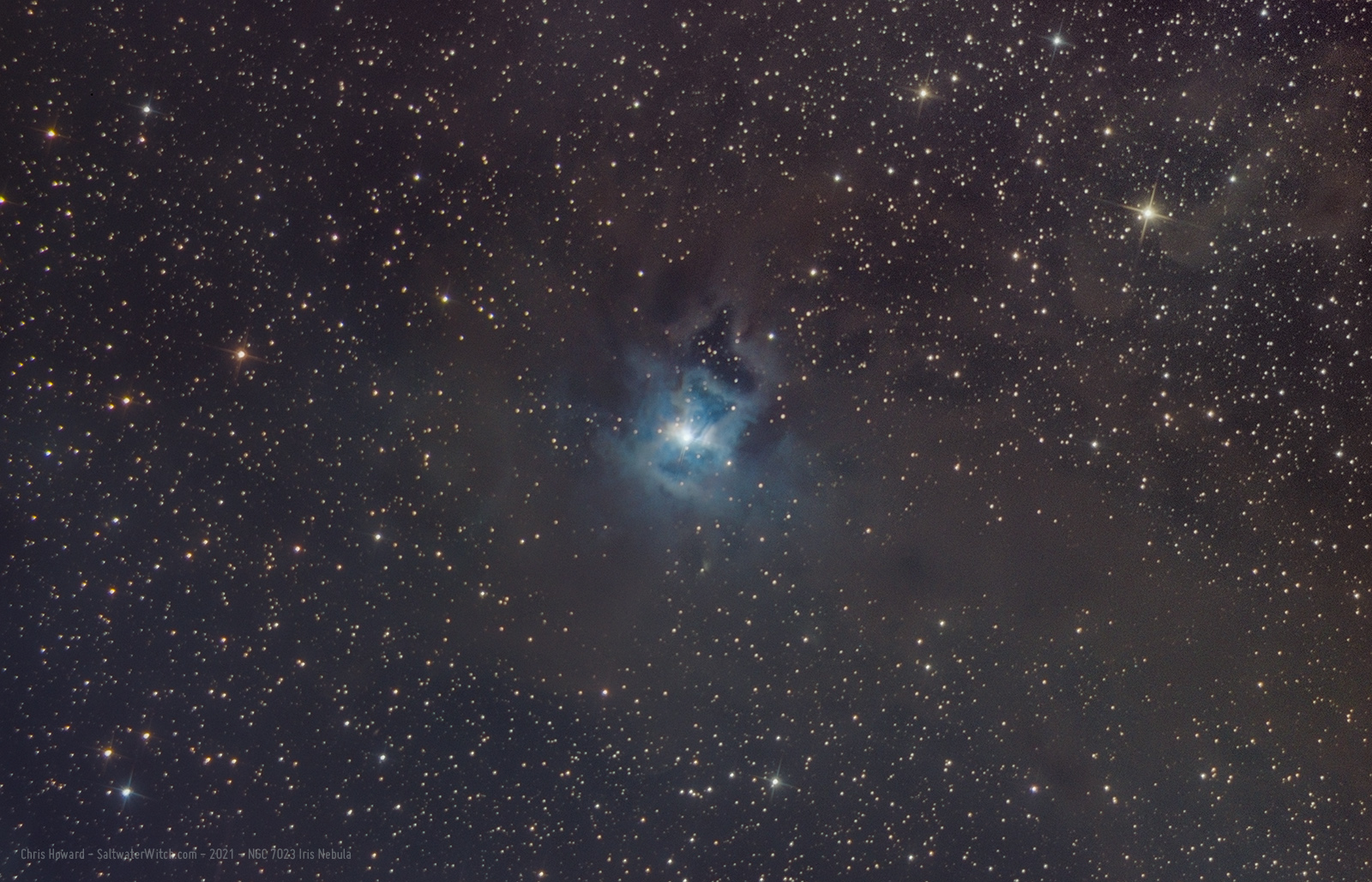
NGC 7023, the Iris Nebula, is a beautiful reflection nebula in the constellation Cepheus. Unlike emission nebulas, which emit their own light and radiation, reflection nebulae are mostly dark and what we observe is starlight scattering through or illuminating clouds of interstellar dust and gas. M45, the Pleiades, is one of the most famous reflection nebulae, with a batch of violently bright blue-white stars lighting up the whole neighborhood. The Iris, in contrast, is surrounded by denser and darker clouds and does not have the intensity of the "seven sisters", the star cluster that makes up the Pleiades. The Iris Nebula is about 1,300 light-years away and that core circular region is about six light-years across. And just to give you a sense of how big the Iris is, the diameter is around 35 trillion miles, or over 56 trillion kilometers. So, pretty good size.
I think the Iris Nebula came out rather well for the first time with this new scope, the Apertura 8" f/4 Newtonian Imager. The stars are a bit wonky as I'm still playing with the coma corrector distance. But overall I had a blast with the 800mm focal length of this OTA. It's perfectly matched with the ZWO ASI071's APS-C sensor and large-ish pixels (4.78m).
Notes: 51 x 240 second subs, no filters. Apertura 8 inch f/4 800m FL Imaging Newtonian, ZWO ASI071MC color camera, GSO Coma Corrector, SkyWatcher EQ6-R Pro mount, Stellarmate/Raspberry Pi 4 running INDI/Ekos/KStars.
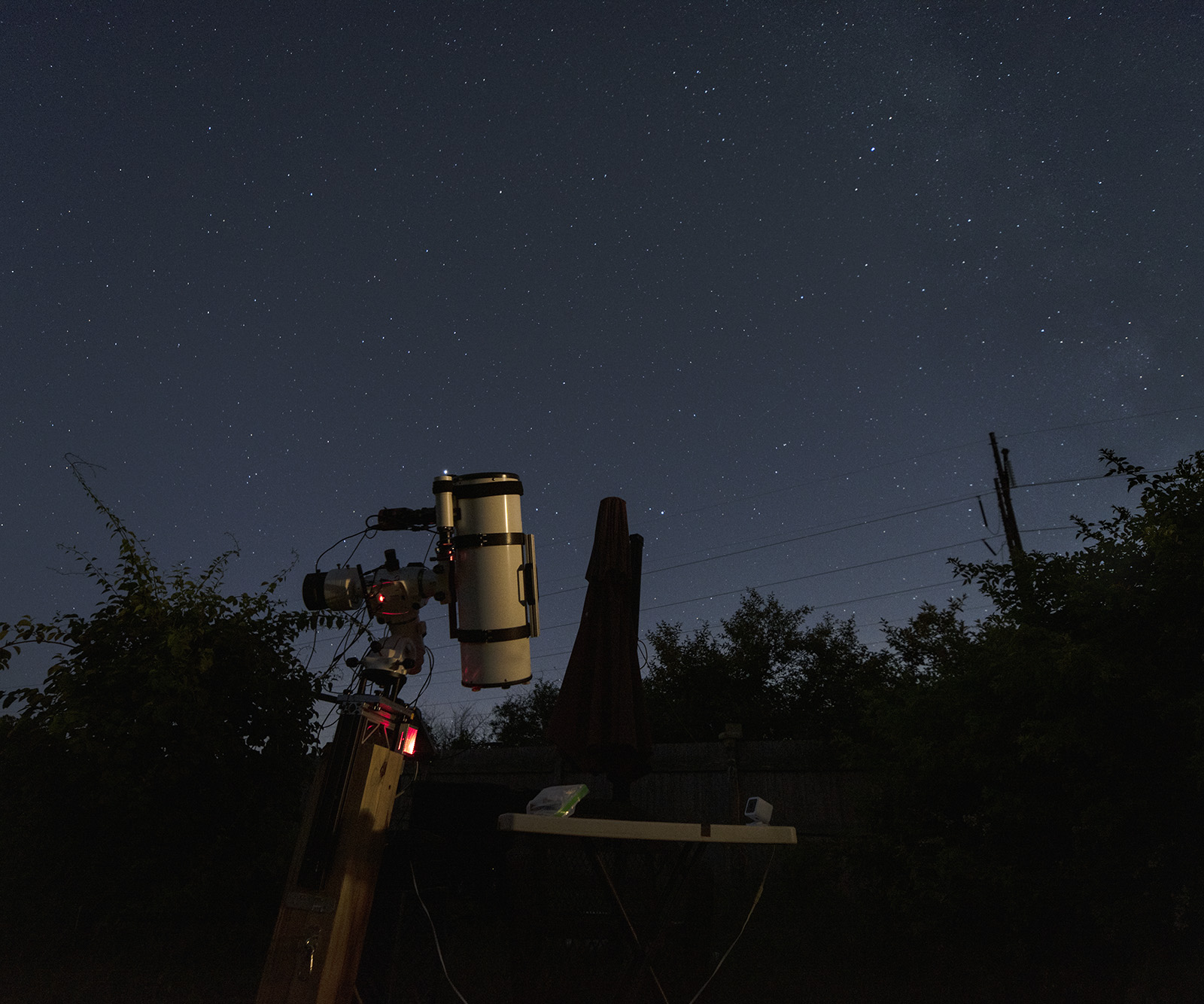
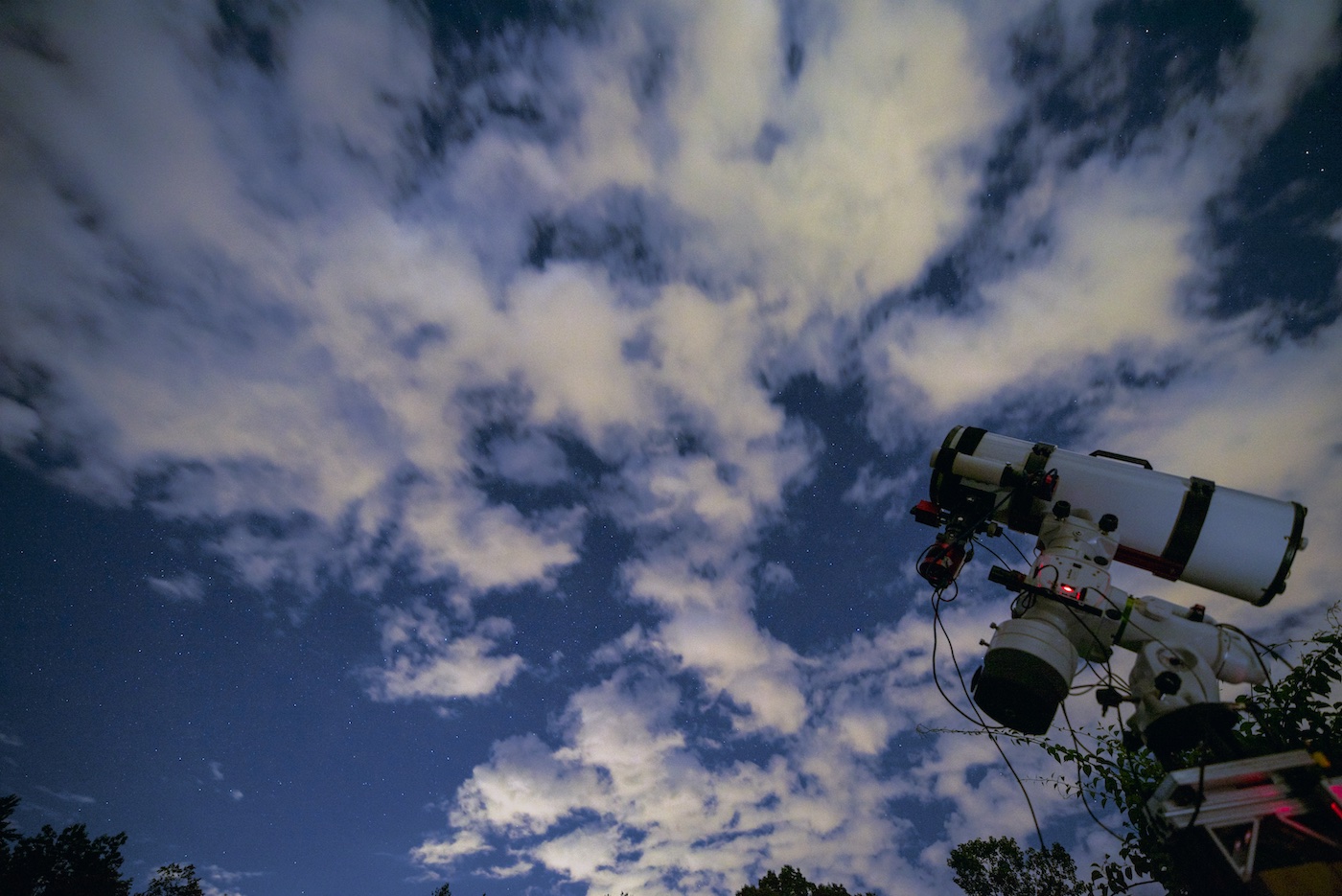
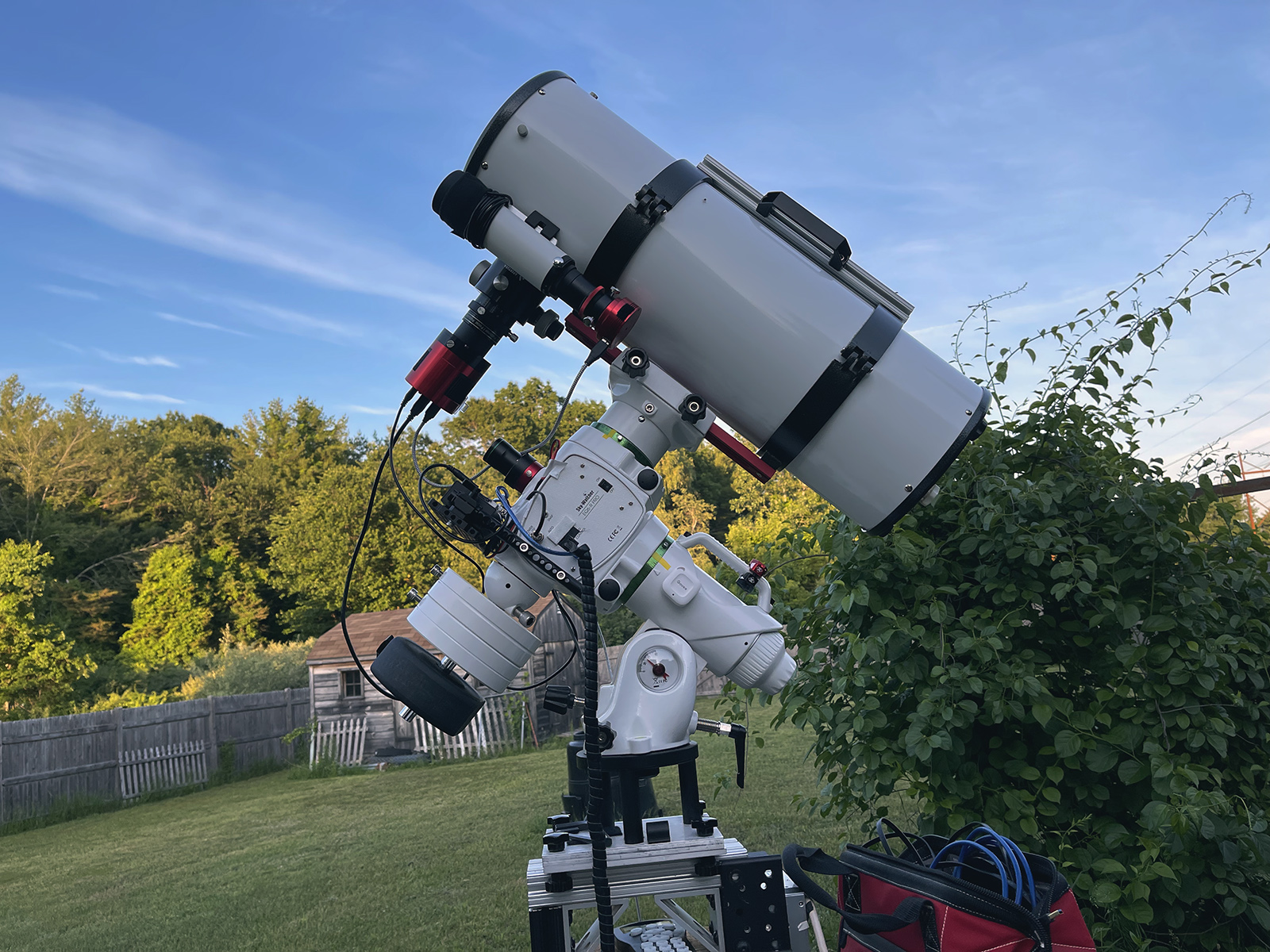
Some shots of the Apertura Newt in action--during the imaging run for the Iris Nebula:
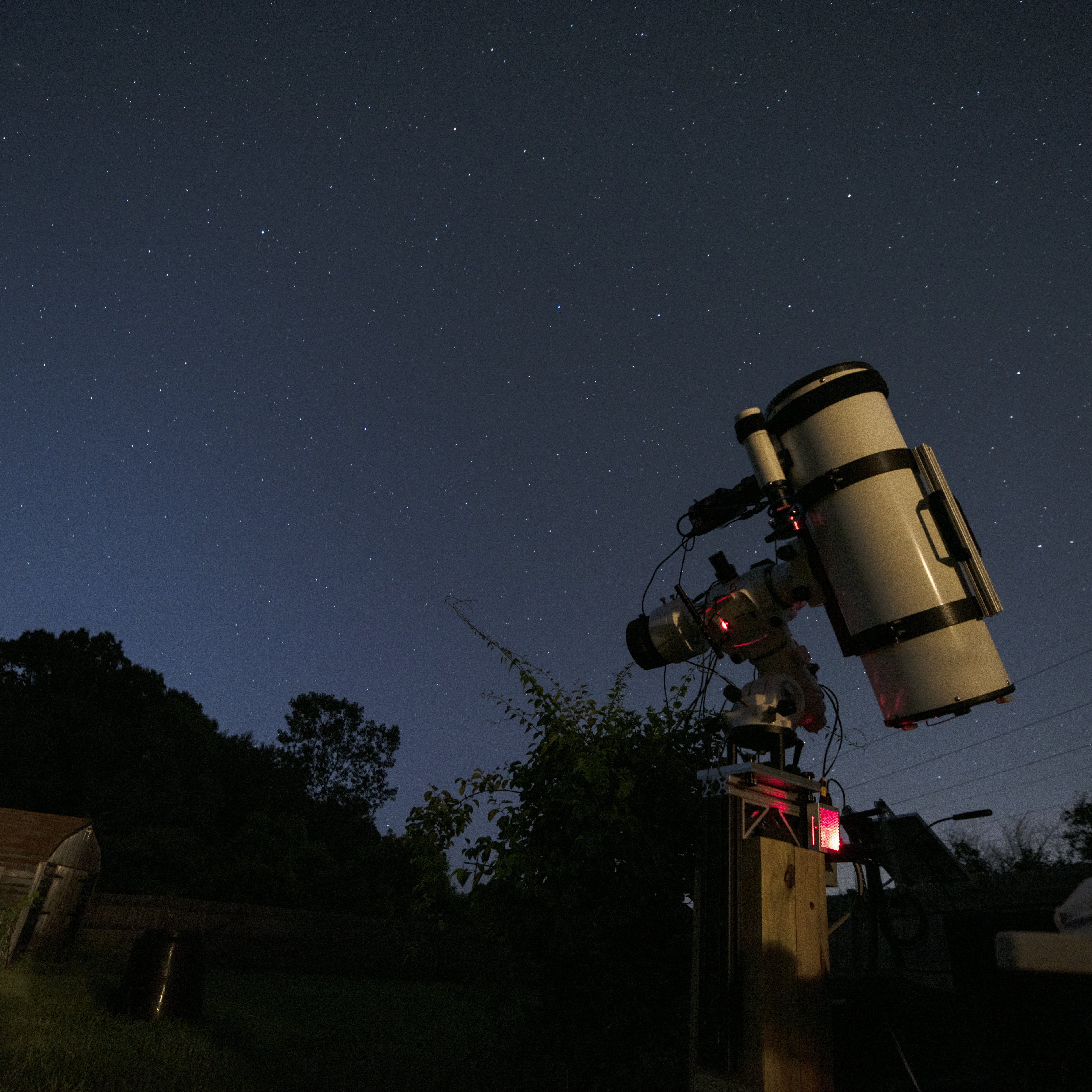
And this is what the skies looked like until after midnight:
Posted June 17, 2021
Shooting M45 Last November
From a set of stills I took with the Nikon D750 while taking subs of the Pleiades (Messier 45). Unfortunately, M45—also called the Seven Sisters, a very bright star cluster in the constellation Taurus—is just out of frame on the left.
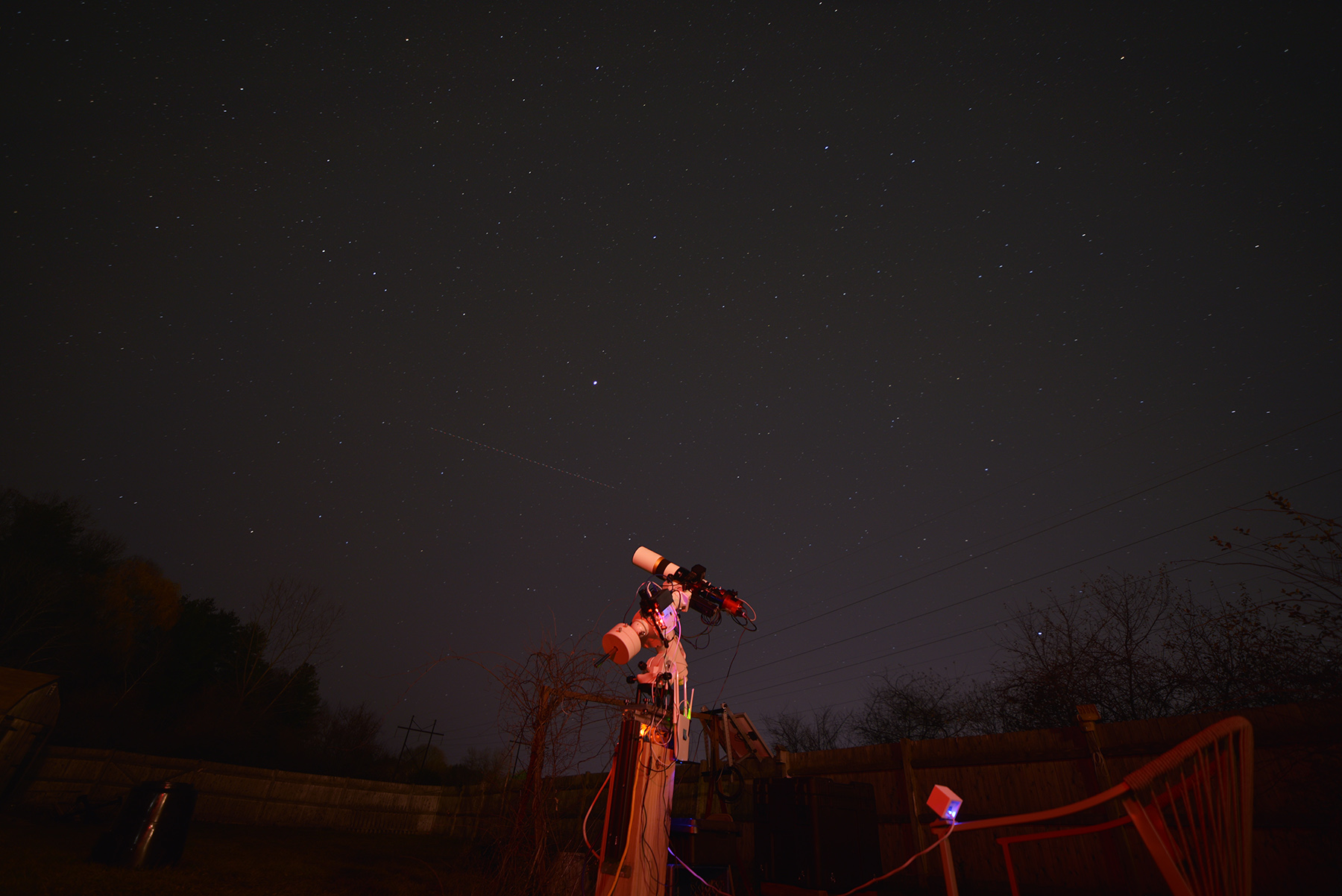
And about half a year later, setting up for a run at the Iris Nebula, NGC 7023, a reflection nebula in the constellation Cepheus.
Posted June 14, 2021
Daylight Focusing
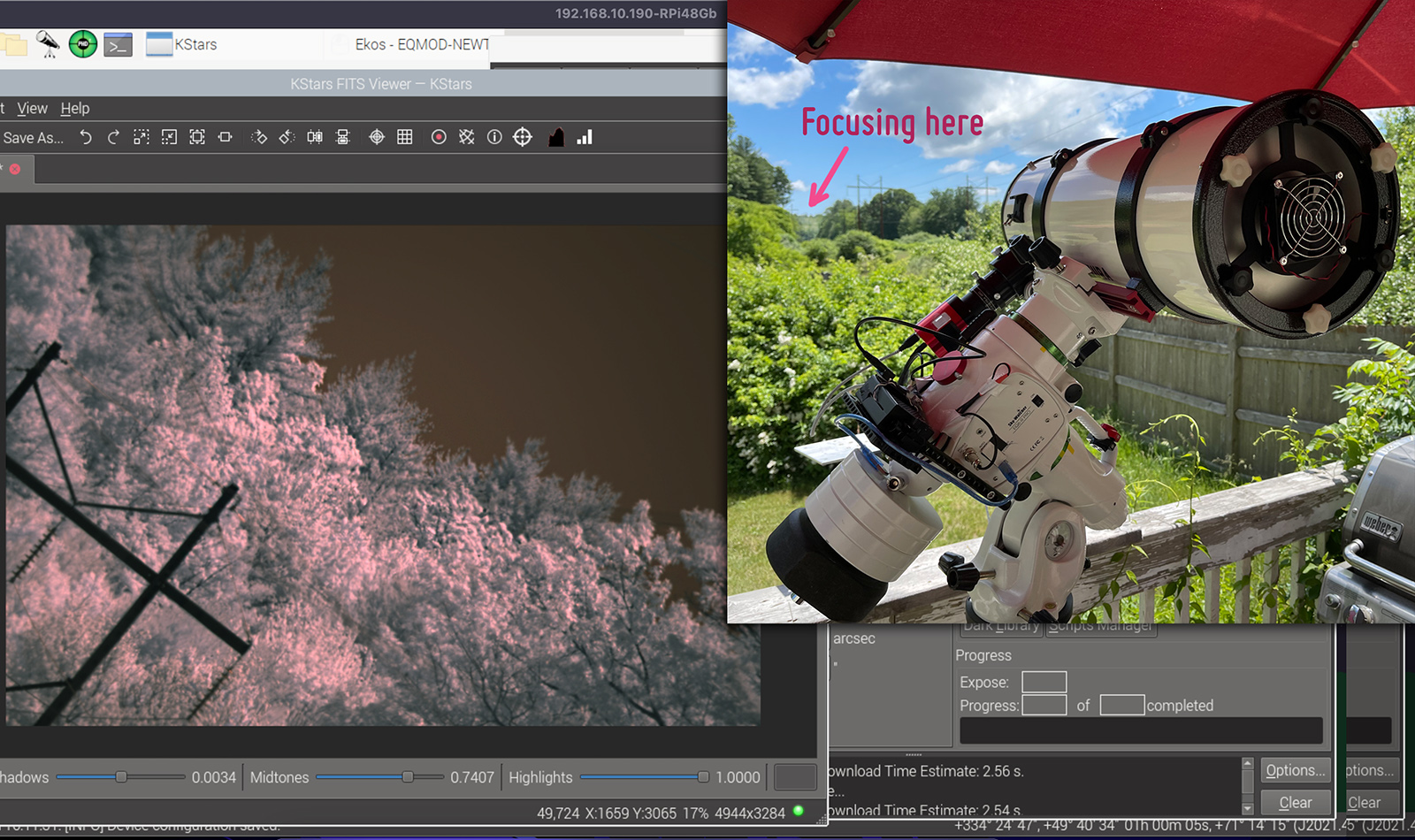
Doing some daylight focus testing with the 8" Newtonian and the ZWO ASI071 camera + Ha filter to cut down on the light. Focusing on that tree line about half a mile away.
I'm still waiting for the final piece of the Newtonian reflector puzzle, a coma corrector. This scope is fairly fast at f/4, and so the coma introduced by the parabolic primary mirror needs some correcting. Without the corrector the star field in images from a large sensor camera will bend away from the center--"coma".
In the meantime, I'm out on the deck today testing focuser position with an old William Optics field flattener/reducer, which brings the scope to 640mm focal length at f/3.2. And it doesn't look too bad. That tree line is about half a mile (~.75 km) away. It's so bright out and this astro camera is so light-sensitive that I'm shooting frames at .001 seconds with a long-pass hydrogen-alpha filter, which is only letting light in from 640nm out to about 800nm, so most of the visual spectrum is cut, and what's left is this range of near infra-red.
Posted June 12, 2021
NGC 6820
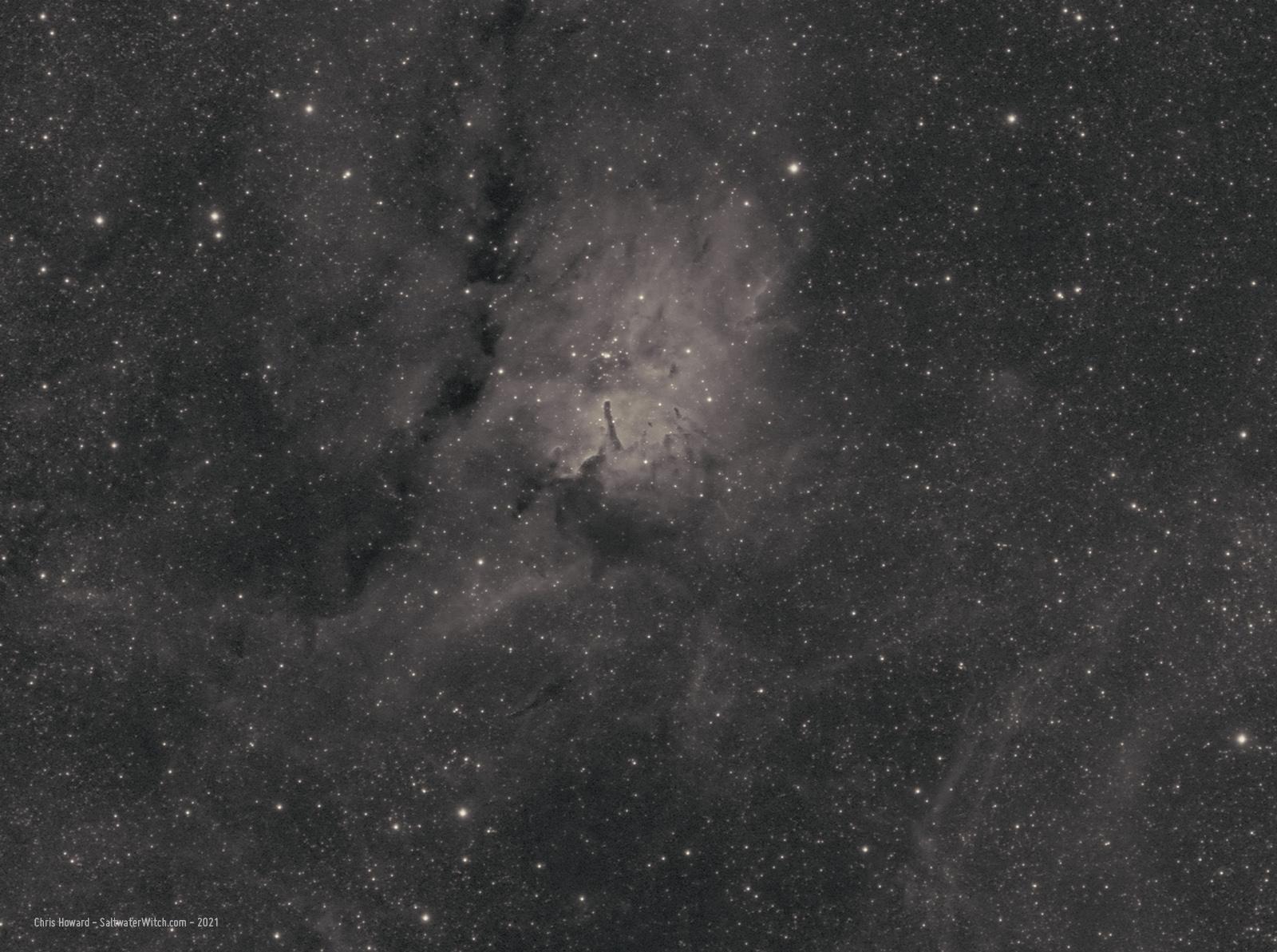
NGC 6820 (Sh2-86) in hydrogen-alpha narrowband. This emission nebula in the constellation Vulpecula is made up of one vast pillar and several not-so-vast pillars of dark molecular dust and gases that have been eroded by the driving stellar winds and intense radiation of the star cluster NGC 6823 (above NGC 6820 in this rotation). Did someone say, "Bok globules"? Yeah, we got those, small dense chunks of dust and gas (hydrogen, carbon, helium, silicates, etc.) that lead to star formation. Of course, small is relative in this case. You can probably take a dozen copies of our entire solar system, including the Kuiper Belt and Oort Cloud and easily fit them all inside most. I gave this monochrome image a hint of vintage tint, a bit or warmth, to counter the core temperatures of Bok globules, which are thought to be some of the coldest objects in the universe. It also makes the image appear a bit brighter.
Posted June 11, 2021
Night Sky, June 10, 2021
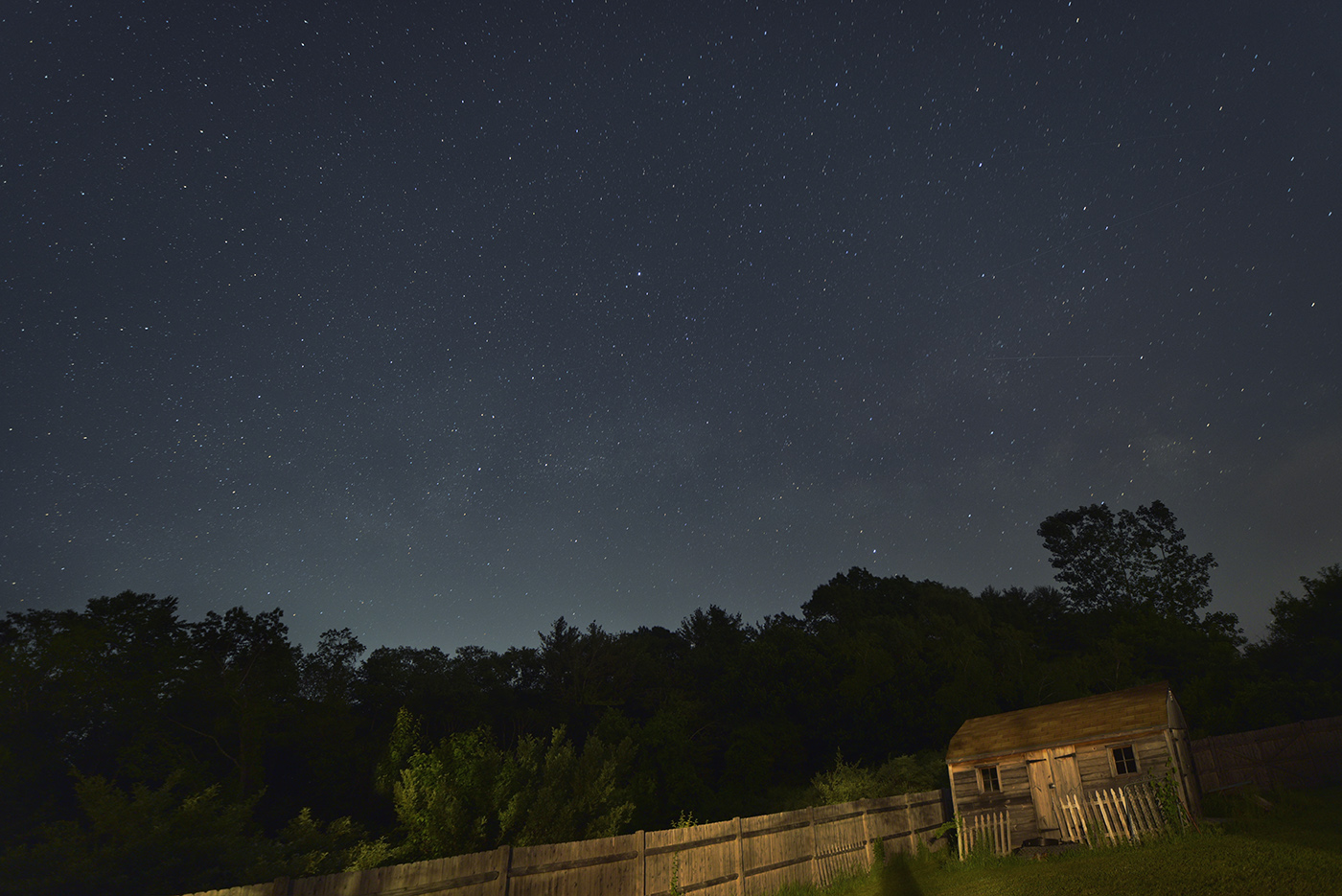
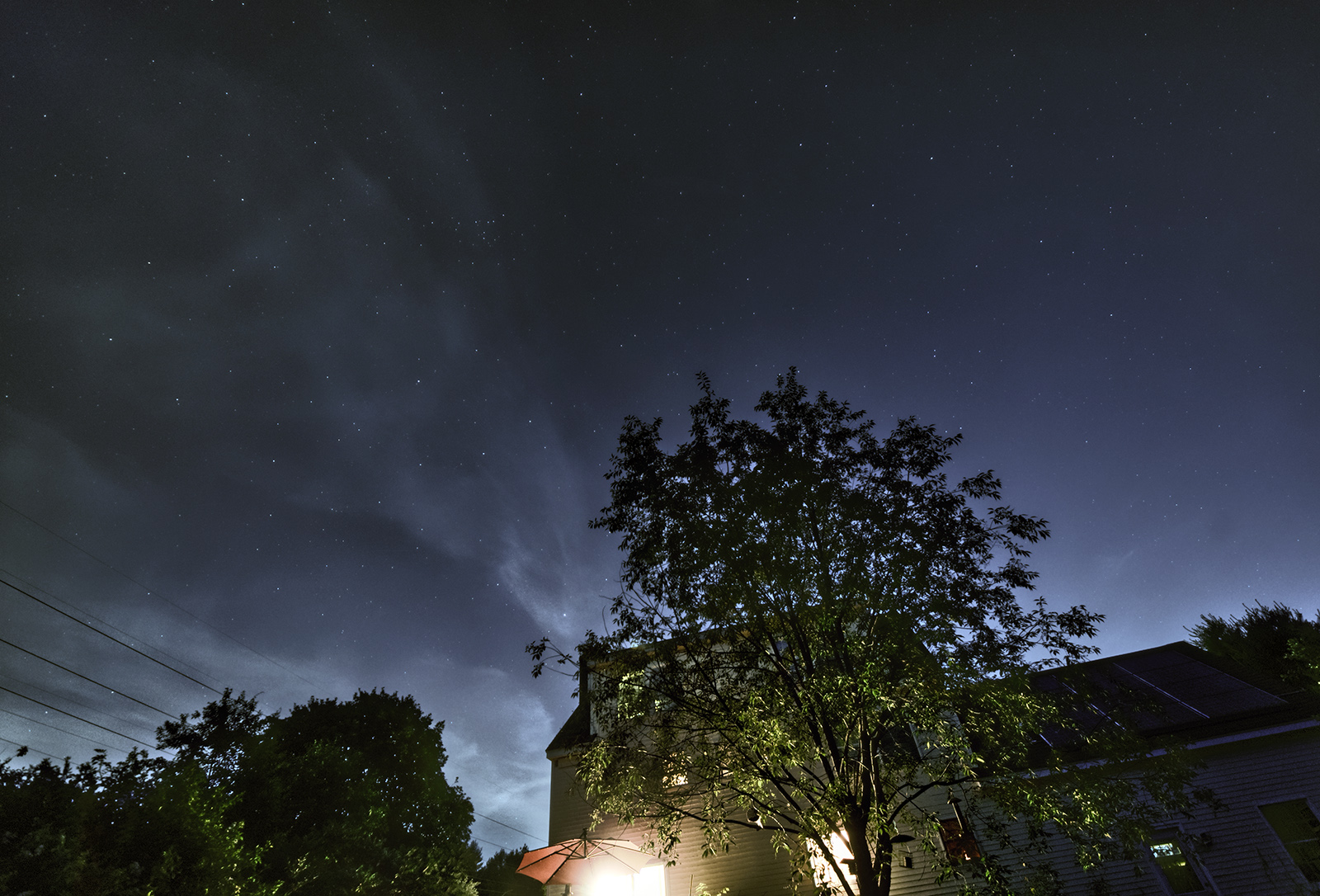
It's a beautiful night out, even if our eyes can't see in 30+ second exposures. Our galaxy, the Milky Way, is swinging up from the East. The "Summer Triangle" is right there in the center, with Altair just above the tree line, Vega is the bright star in the center, Deneb below and to the left. Nikon D750 and Irix 15mm f/3.2
Posted June 10, 2021
New Scope!
Looks like I'm going to become an OTA-wieldin' Collimatin' Reflector guy! I have been a refractor guy from the beginning. My first serious scope was the William Optics GT81--six or seven years ago! I used a Nikon D3100 and then the full-frame Nikon D750 for a little while before diving in completely with narrowband and a monochrome astro camera, an Atik 414EX CCD.
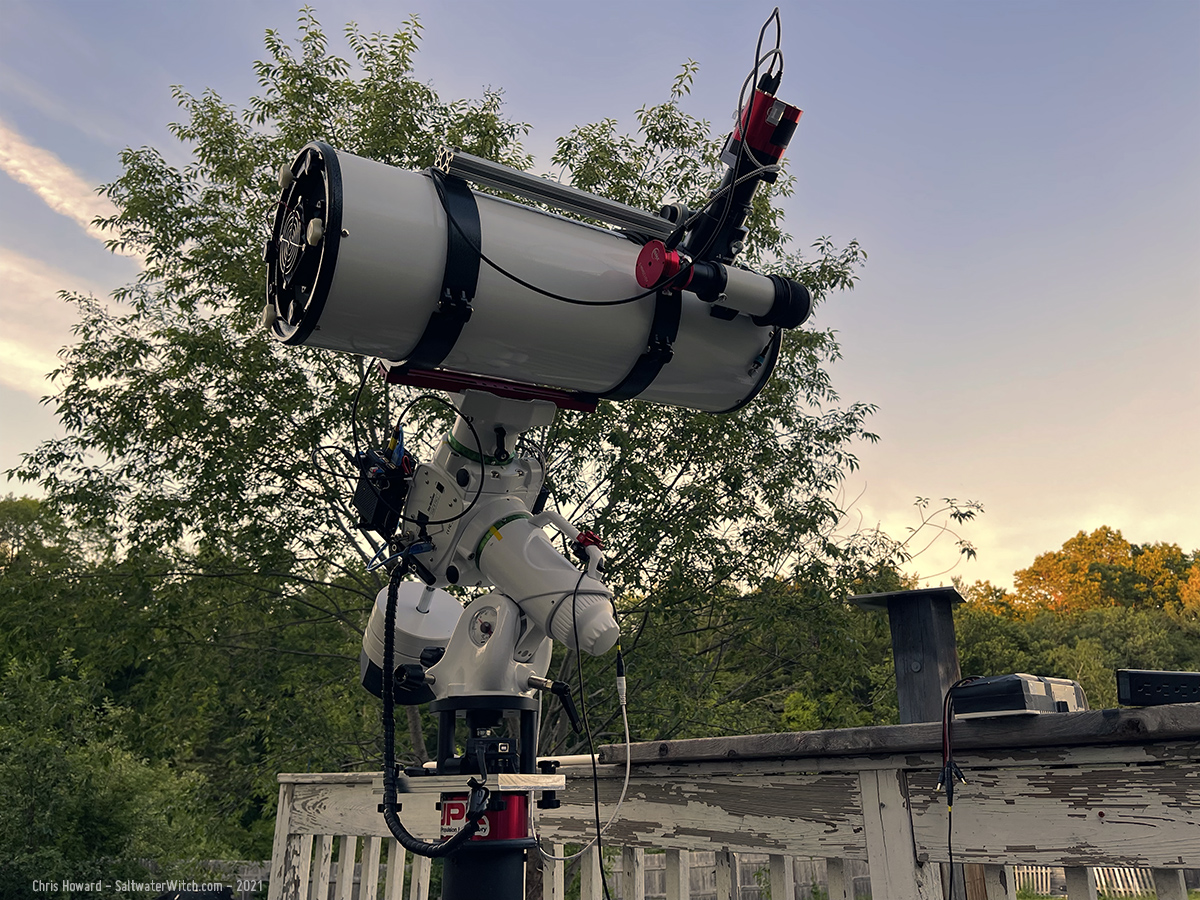
Last week I bought a new telescope and it arrived today, an Apertura 8" Newtonian Imaging scope with a focal length of 800mm at f/4. There are a bunch of inexpensive fast Newtonians on the market, sold under different names and brands, and at least some of them, including Apertura, TPO, TS-PHOTON are rebranded/painted OTAs made by GSO (Guan Sheng Optical) in Taiwan.
The Apertura came in at $499, one of the least expensive 8" Imaging Newts, but it has some upgrades over what's pictured on the Highpoint Scientific site: better focuser, better dovetail bar (see the red vixen bar in the pic below--that's included). Even the guide scope shoe has two threaded hold downs, but the product shots only show one. Pleased about that. (It came with one thumb screw, and I can add one. No problem. For the guide scope I replaced both with hex socket cap screws).
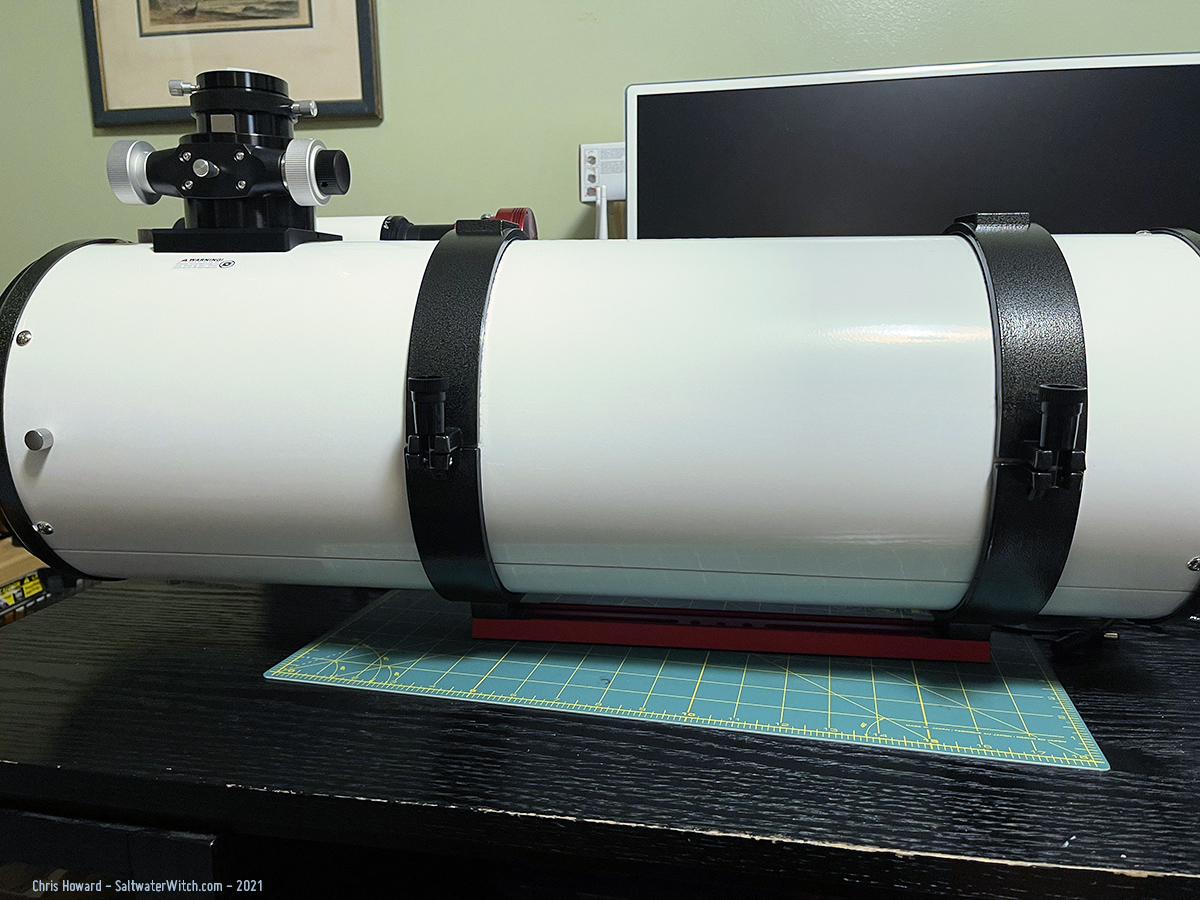
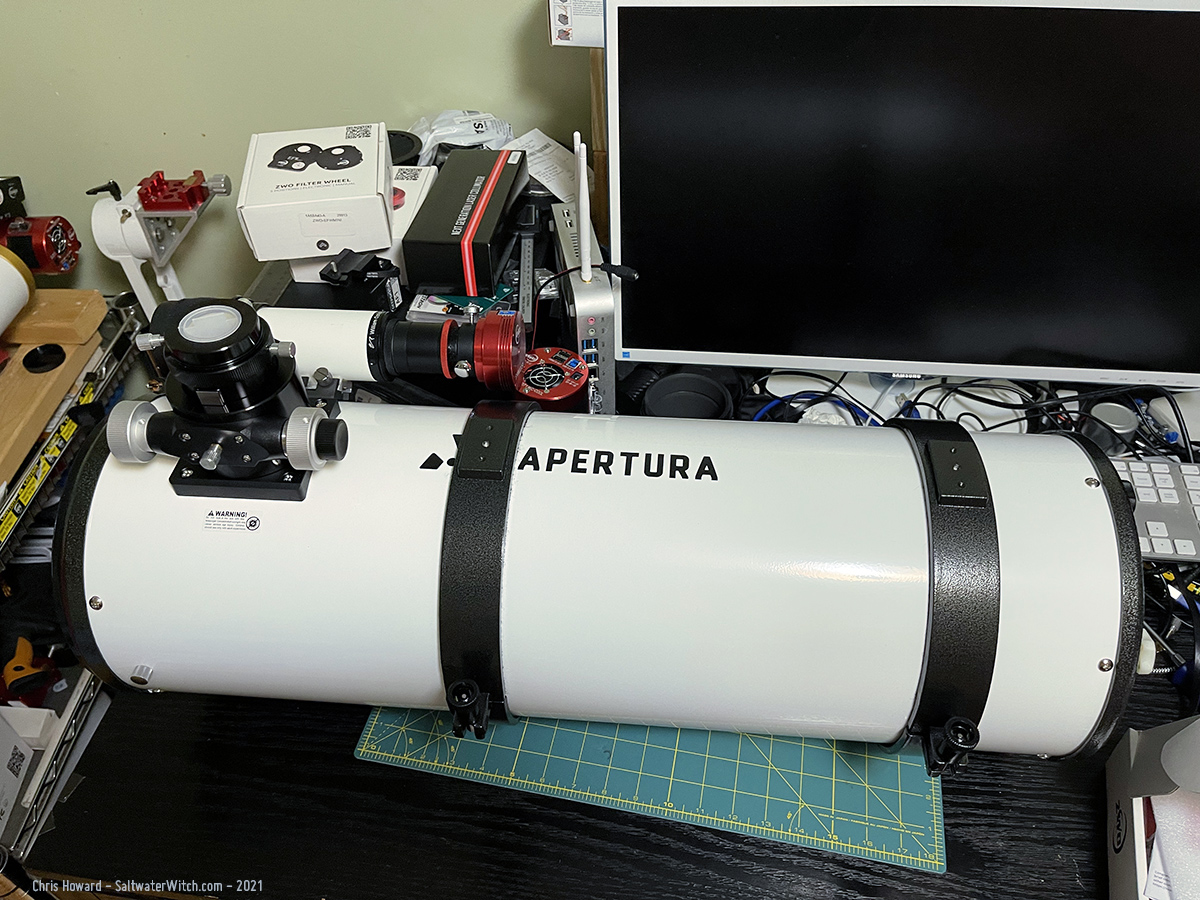
The focuser surprised me because my old Astro-Tech RC scope came with the bottom of the line GSO crayford, and that's what I expected here, given the product pics on Highpoint, but when I opened the box I noticed this one came with the better and newer GSO focuser, the linear bearing crayford. It's no Moonlite, but it'll do.
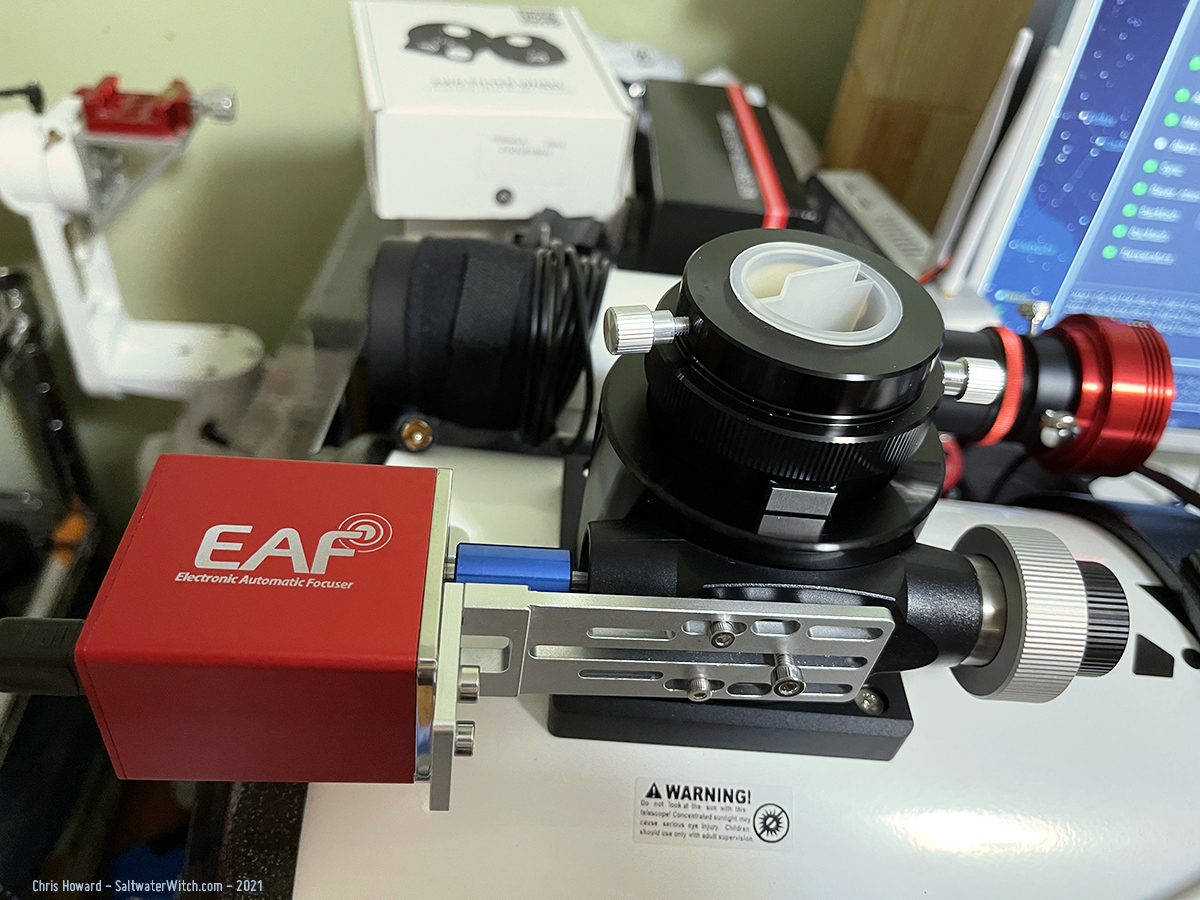
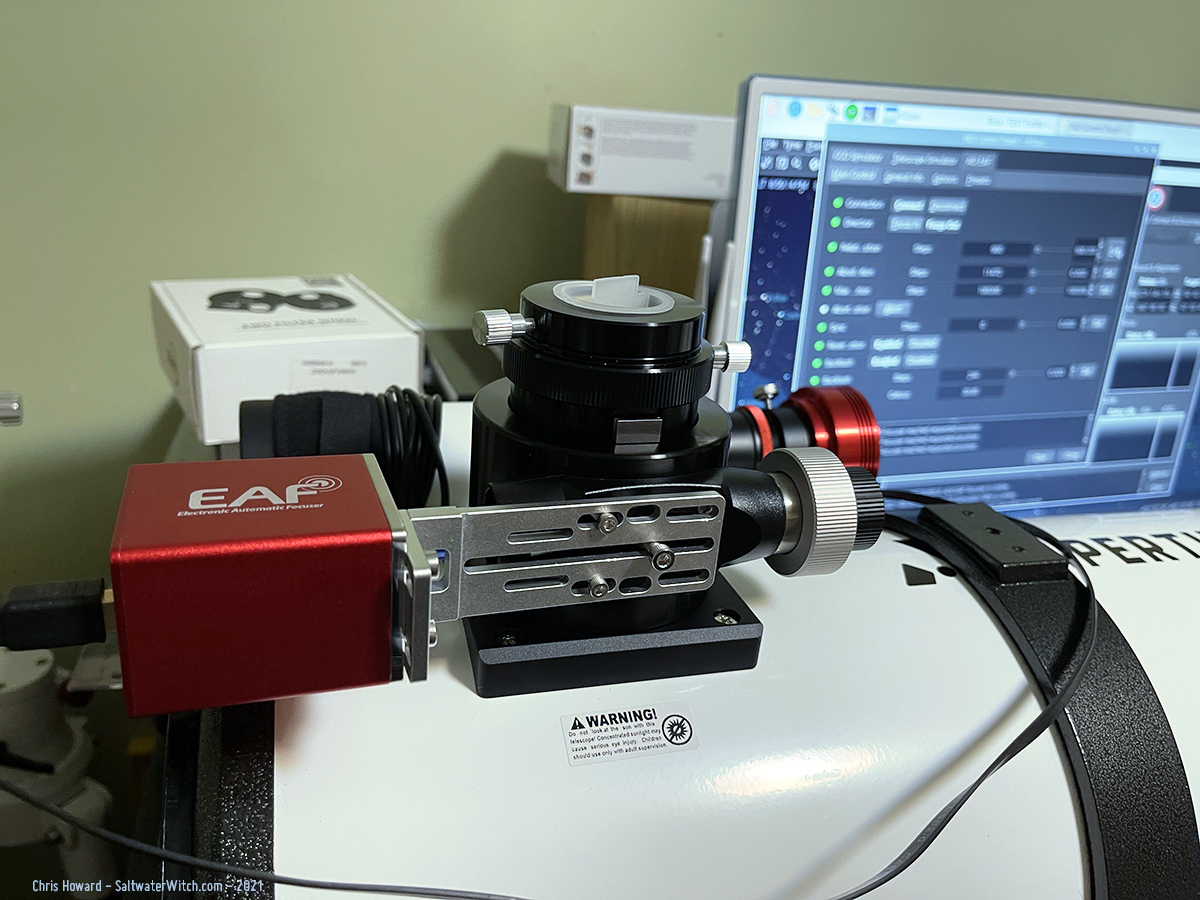
I spent no time at all adding the ZWO EAF autofocuser, the 2nd generation model that's powered off the USB and doesn't require the 12v dc line in. This has been sitting on my workbench for months, waiting for a scope to autofocus! I'm testing it out right now in Ekos (on the screen in the background). That's my William Optics 50/200mm guide scope + ZWO ASI120MM-S camera attached to the Apertura behind the focuser.
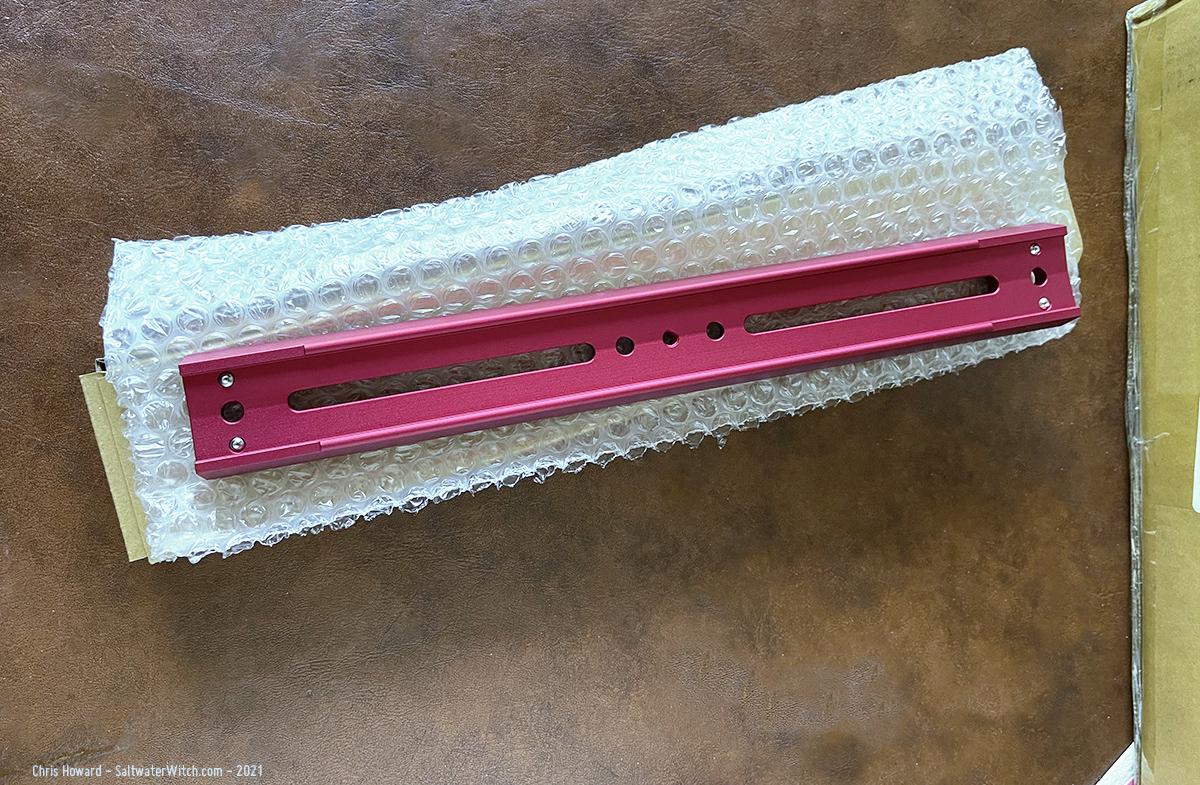
The Apertura came with a really nice red-anodized Vixen-style dovetail bar--13"/330mm long. Perfect.
Of course, an hour after UPS dropped it off it started raining--a full on summer downpour.
I'll test things out when we get some clear skies. I'm still waiting for a coma corrector--it seems there isn't one Baader coma corrector Miii anywhere on this planet for sale. I'm on hold until late June for more stock, so it may be July before I get some serious imaging out of the Apertura 8" Newtonian. There is a much less expensive (around $100) Apertura coma corrector, which I may try.
Link to Highpoint Scientific: Apertura 8" f/4 Imaging Newtonian OTA - 8F4N
Posted June 8, 2021
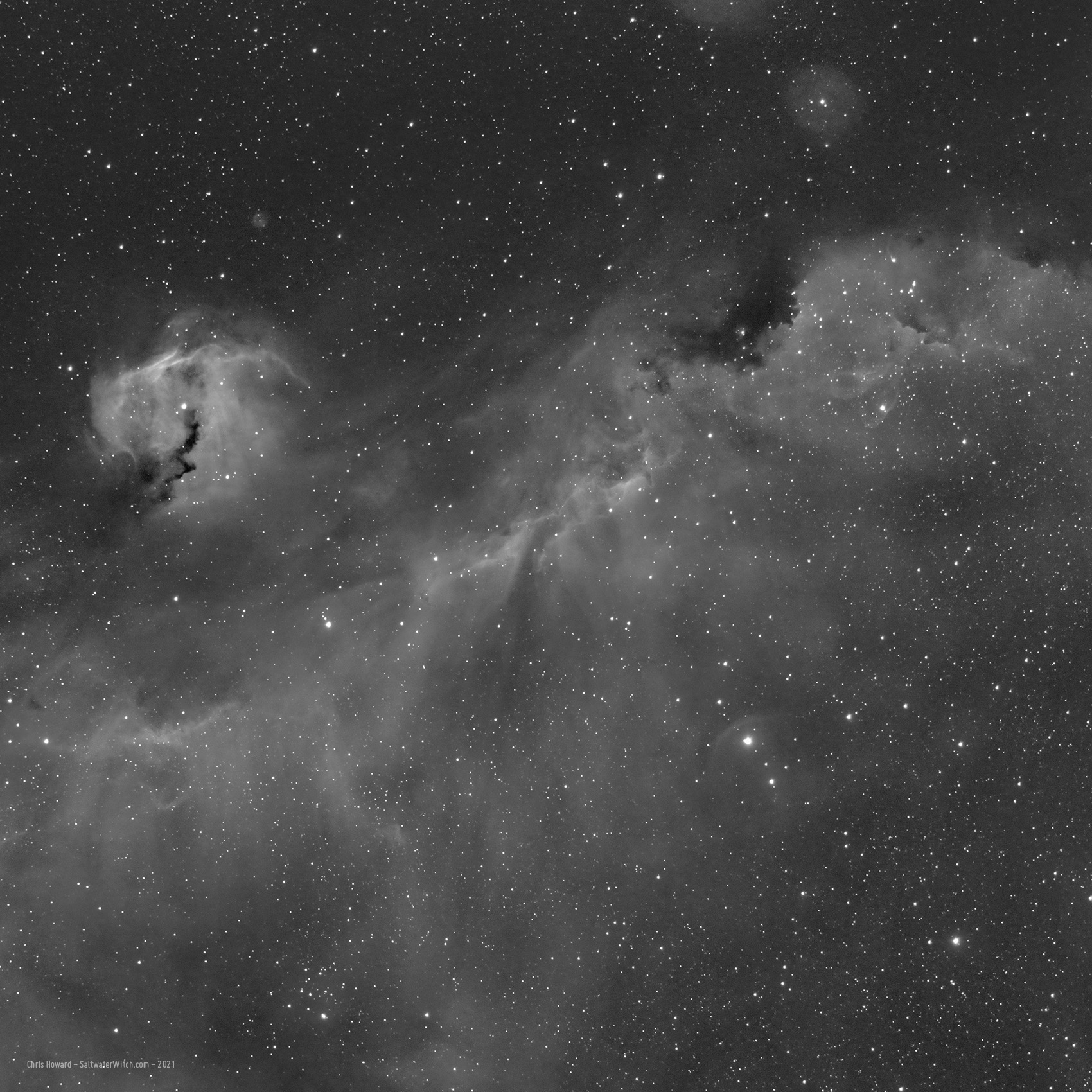
Part of IC 2177, NGC 2327 in Hydrogen-alpha
Another re-process of my narrowband data from an imaging run late last year, this time part of the "Seagull Nebula" right at the edge of the constellation Monoceros. This is part of a large H II region over 3600 lightyears away from us, and in this field of view, we're looking at clouds of interstellar ionized hydrogen roughly 1000 trillion miles / 1600 trillion kilometers from one side of this image to the other.
Posted May 23, 2021
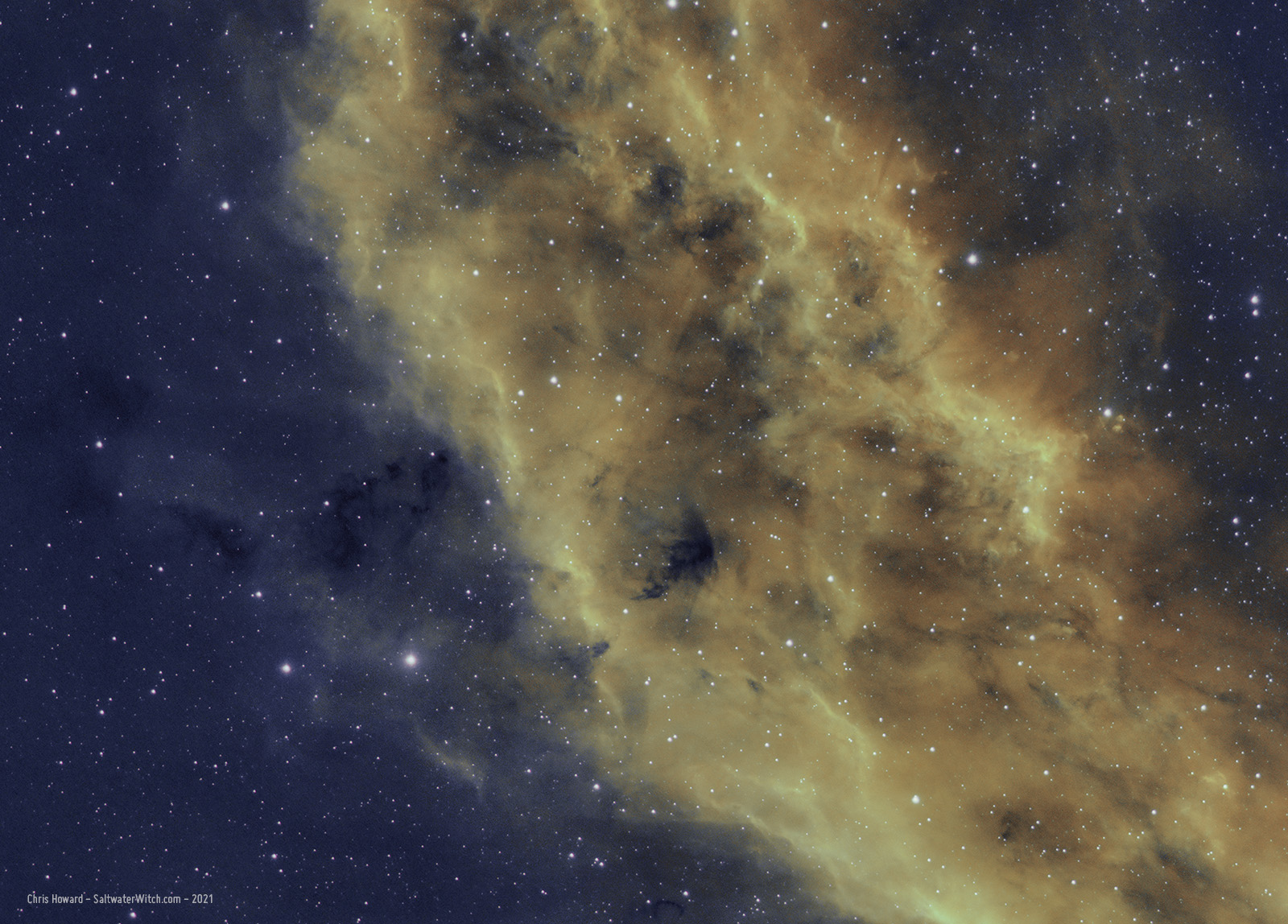
NGC 1499 (California Nebula) Reprocess
While the clouds and rain hang about, I'm reprocessing some data from late last year. False color imaging is fascinating, and I'm retrying the bi-color, Hydrogen-alpha and Sulfur 2 made up of Red and Blue with equal parts Green. The dark clouds of interstellar dust and pockets of hydrogen stand out more this time. NGC1499 is an emission nebula in the constellation Perseus, about 1000 lightyears away from us. This is the central region of the California Nebula, so that means the interstellar version of Fresno is somewhere in there.